A home-care answer for Los Angeles · Reviewed October 9, 2026
Can you mix baking soda and vinegar?
They react and fizz, but usually do not make a better cleaner together. The reaction uses up the vinegar's acid and the baking soda; any excess ingredient can remain. Do not seal the reacting mixture or add other cleaners.
See the chemistry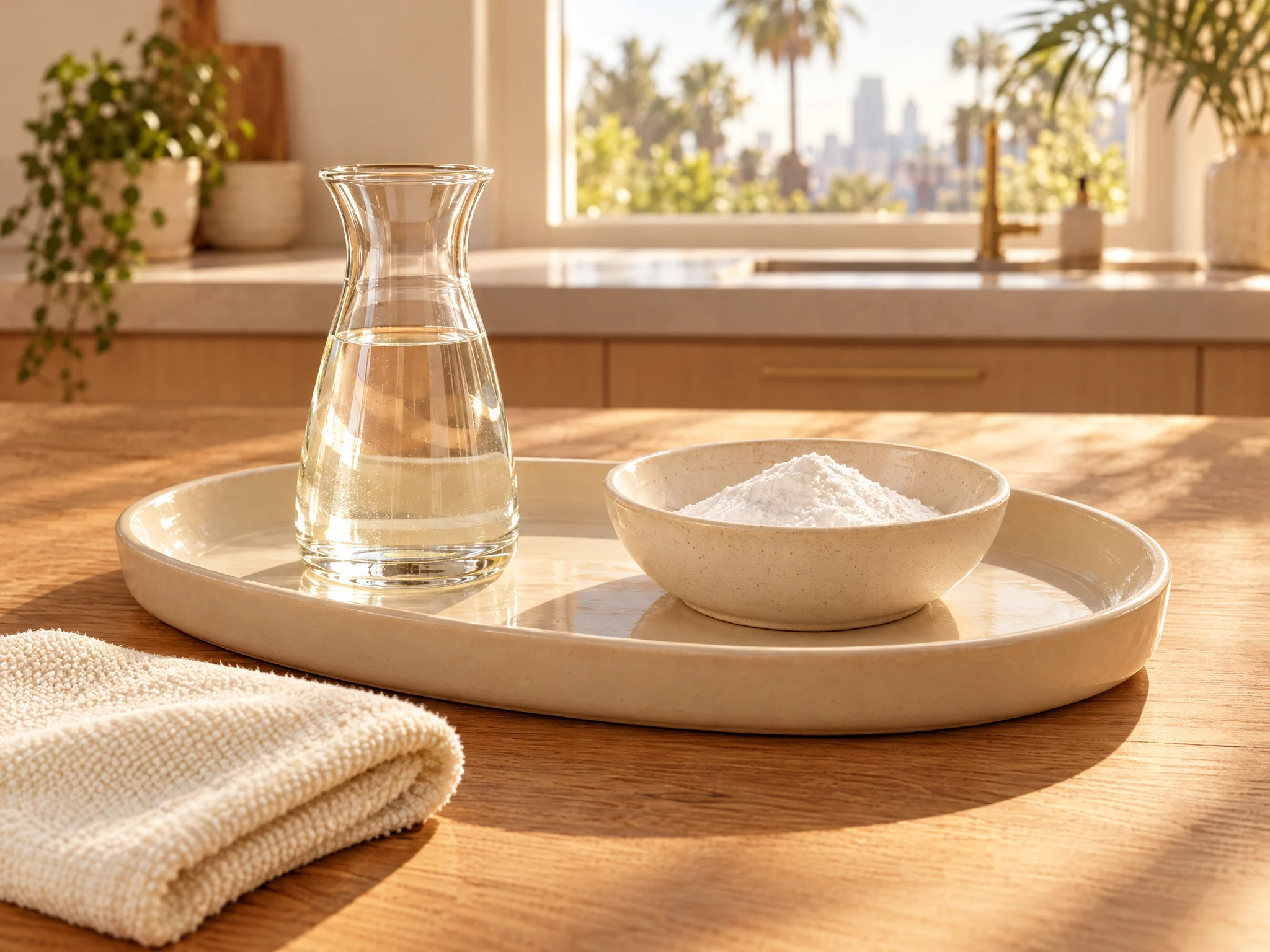
The reaction, explained
The bubbles are gas, not proof of a cleaner surface.
What goes in
- Vinegar contains acetic acid.
- That acid reacts with baking soda. Its concentration matters; different vinegar products are not interchangeable cleaning instructions.
- Baking soda is sodium bicarbonate.
- It is a mild base. Combining the two ingredients consumes some or all of each reactant, depending on the amounts.
What the reaction makes
- Carbon dioxide
- The gas you see as bubbles. Gas needs room to escape, so never seal a reacting mixture.
- Water
- One reaction product. The entire bowl does not automatically become plain water.
- Sodium acetate
- A dissolved salt that is not typically used as a household cleaner. It is not a stronger replacement for both starting ingredients.
The amount left over matters. More vinegar can leave excess acid; more baking soda can leave excess base or powder. You cannot call every recipe neutral, harmless to finishes, or equally effective.
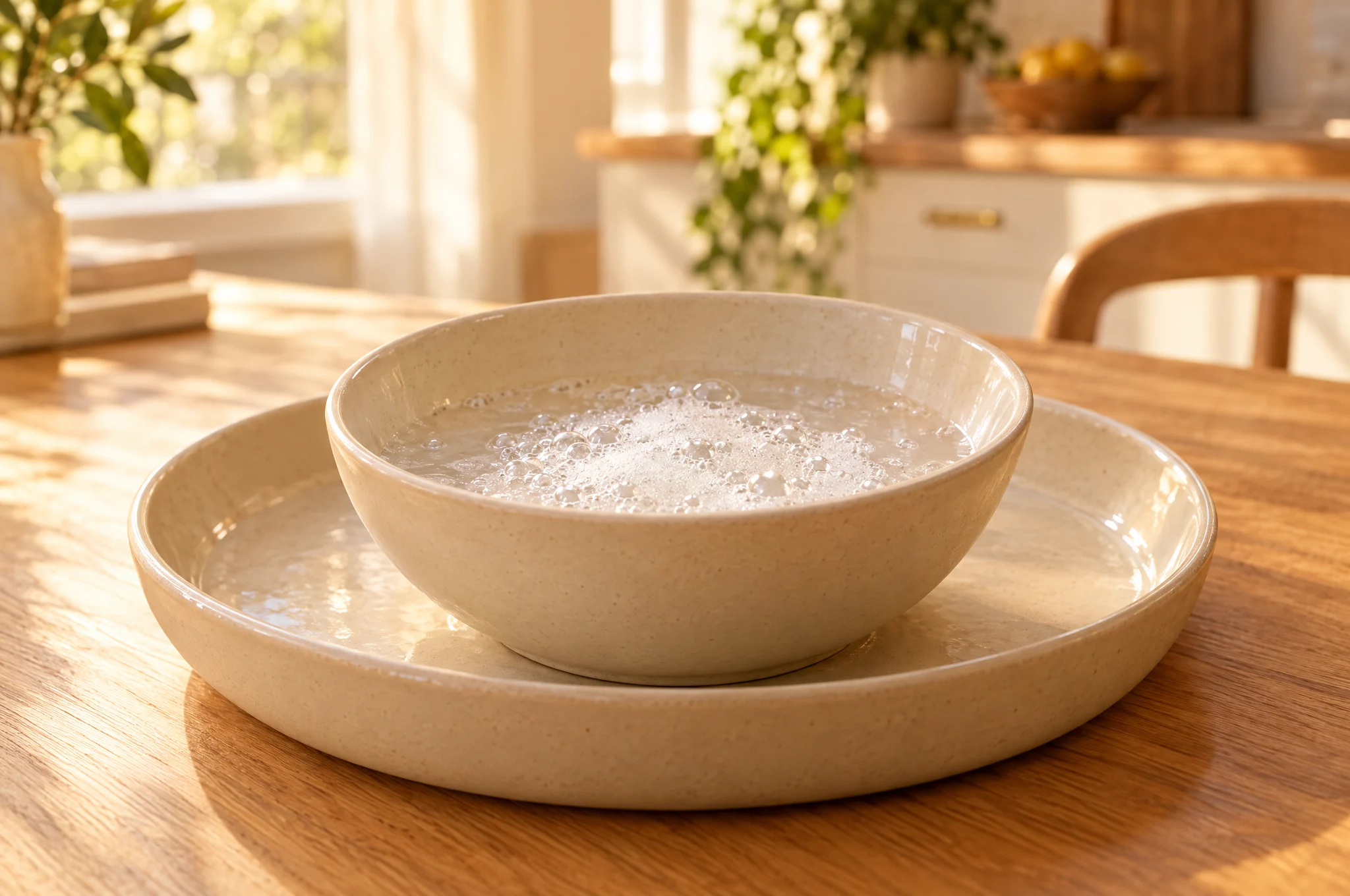
What does the fizz actually tell you?
It tells you a reaction is happening. The American Chemical Society identifies these reaction products. It does not establish that this mixture removes more grease, soap residue, or germs than a suitable cleaner.
Chemistry educator Nathan Kilah explains that bubbling can have a limited mechanical effect. Leftover baking soda and scrubbing can also explain an apparent result. Neither is a reason to bottle the combination as an all-purpose cleaner.
Choose for the surface
Start with what you are cleaning, not a recipe.
A countertop, wood floor, and appliance interior do not share one set of care instructions. Identify the material and finish before deciding what belongs on it.
The American Cleaning Institute advises checking manufacturer guidance and warns that vinegar can damage stone and wood. Adding baking soda does not turn it into a finish-approved product.
Choose a surface-appropriate cleaning kitFor ordinary washable surfaces
Use the cleaner and dilution allowed by the surface maker. CDC guidance notes that soap and water can remove most germs in everyday cleaning. A suitable detergent, physical wiping, and any required rinse are more useful instructions than waiting for a fizz.
For marble and other natural stone
The Natural Stone Institute recommends neutral cleaner, stone soap, or a suitable mild detergent. Acids can etch marble and limestone, and abrasive powders can scratch some stones. Do not try to make vinegar stone-safe by guessing how much baking soda to add.
Read the marble-care guideFor a disinfection task
Vinegar is not a disinfectant. Choose a suitable EPA-registered disinfecting product and follow its label, including the time the surface must stay wet. Do not add vinegar, baking soda, or another cleaner to it.
Separate cleaning from disinfectingA practical note for Los Angeles homes
If you are clearing old commercial cleaning products out of your cabinet, use local hazardous-waste guidance instead of mixing leftovers. Culver City's environmental program includes cleaners in its household hazardous-waste guidance and points residents to LA County collection events and permanent centers.
Its instructions say to keep those products sealed in their original containers for collection. This is not an instruction to seal a reacting baking-soda-and-vinegar mixture. Check current acceptance, location, and hours before traveling.
Hand off the surface details, not a homemade mix.
For a booked visit, share your surface materials and manufacturer restrictions. La La Land Cleaning is an insured referral agency that connects Los Angeles clients with independent cleaning professionals. Confirm products, tasks, and exclusions before the visit.
Review standard cleaning scope or what to confirm about supplies. Inside-appliance and interior-window cleaning are separate add-ons, not automatically included.
Book a cleaning in LAFAQ
The questions behind the fizz
Short answers about mixing, residues, surfaces, and safety.
Does mixing baking soda and vinegar make a stronger cleaner?
Usually no. The acid-base reaction consumes acetic acid and sodium bicarbonate and produces sodium acetate, water, and carbon dioxide. If a recipe leaves excess vinegar or baking soda, that leftover ingredient and physical wiping may still do some work. The fizz alone is not evidence of better cleaning.
Is it dangerous to mix baking soda and vinegar?
The reaction between these two ingredients produces carbon dioxide, not chlorine gas. That does not make every use safe. Do not seal a reacting mixture in a bottle or other closed container because gas can build pressure. Keep it away from eyes, check surface instructions, and do not add bleach, disinfectants, or other cleaning products.
Does the mixture have a neutral pH?
You cannot assume that. The final mixture depends on the vinegar's concentration and the amounts used. Excess acid or baking soda can remain. A homemade mixture is not equivalent to a manufacturer-approved neutral cleaner for stone or another delicate finish.
Can baking soda and vinegar disinfect a counter?
Do not treat the mixture as a disinfectant. The American Cleaning Institute says vinegar is not a disinfectant. For a disinfection task, use an appropriate EPA-registered product for the surface and follow its label, including preparation and contact time. Never add vinegar or baking soda to that product.
What if I use baking soda first and vinegar afterward?
That is different from premixing a bottle, but it still needs surface-specific permission. Adding vinegar to leftover baking soda makes it react and fizz; it does not prove that grease has been dissolved. Follow the appliance or surface maker's instructions rather than applying a generic two-ingredient method everywhere.
Will this combination unclog a drain?
Bubbling can have a mechanical effect in some situations, but that is not a guarantee that a drain blockage will clear. Do not add this mixture to a drain that contains a commercial drain cleaner or an unknown product. Follow the plumbing and product instructions, and get a plumber's help for persistent blockage.
The chemistry and care sources
Reviewed October 9, 2026. Chemistry explains the reaction; product labels and surface instructions still decide what you should use. This page is not a cleaning-performance experiment.
Photography illustrates home-care situations. It is not a record of a client visit.
- American Chemical Society (opens in a new tab)
Identifies the reactants and the three reaction products: sodium acetate, water, and carbon dioxide.
- Nathan Kilah, The Conversation (opens in a new tab)
Explains why the fizz does not establish cleaning power, why recipes can leave excess ingredients, and where bubbling may have a mechanical effect.
- American Cleaning Institute (opens in a new tab)
Sets limits on vinegar use, including material compatibility and the difference between vinegar and a disinfectant.
- Natural Stone Institute (opens in a new tab)
Recommends neutral stone-care products and warns that acids can etch calcareous stone and abrasives can scratch some stones.
- CDC bleach safety guidance (opens in a new tab)
Warns against mixing bleach or disinfectants with other cleaners and explains ventilation and label precautions.
- City of Culver City environmental guidance (opens in a new tab)
Lists household hazardous-waste handling instructions and Los Angeles County collection options. Check current acceptance and hours before a trip.
- Poison Control (opens in a new tab)
Explains cleaning-product risks, including dangerous fumes when acids and chlorine bleach are mixed.