For Los Angeles homes · Reviewed October 11, 2026
How to clean a glass stovetop
For ordinary spills, switch the cooktop off, let it cool, and use the cleaner and soft cloth or pad approved for your model. Remove the cleaning residue before cooking again. Scrapers are not safe for every glass surface. Hot sugar or melted plastic needs the manufacturer's urgent spill instructions, not this cool-surface routine.
Read the method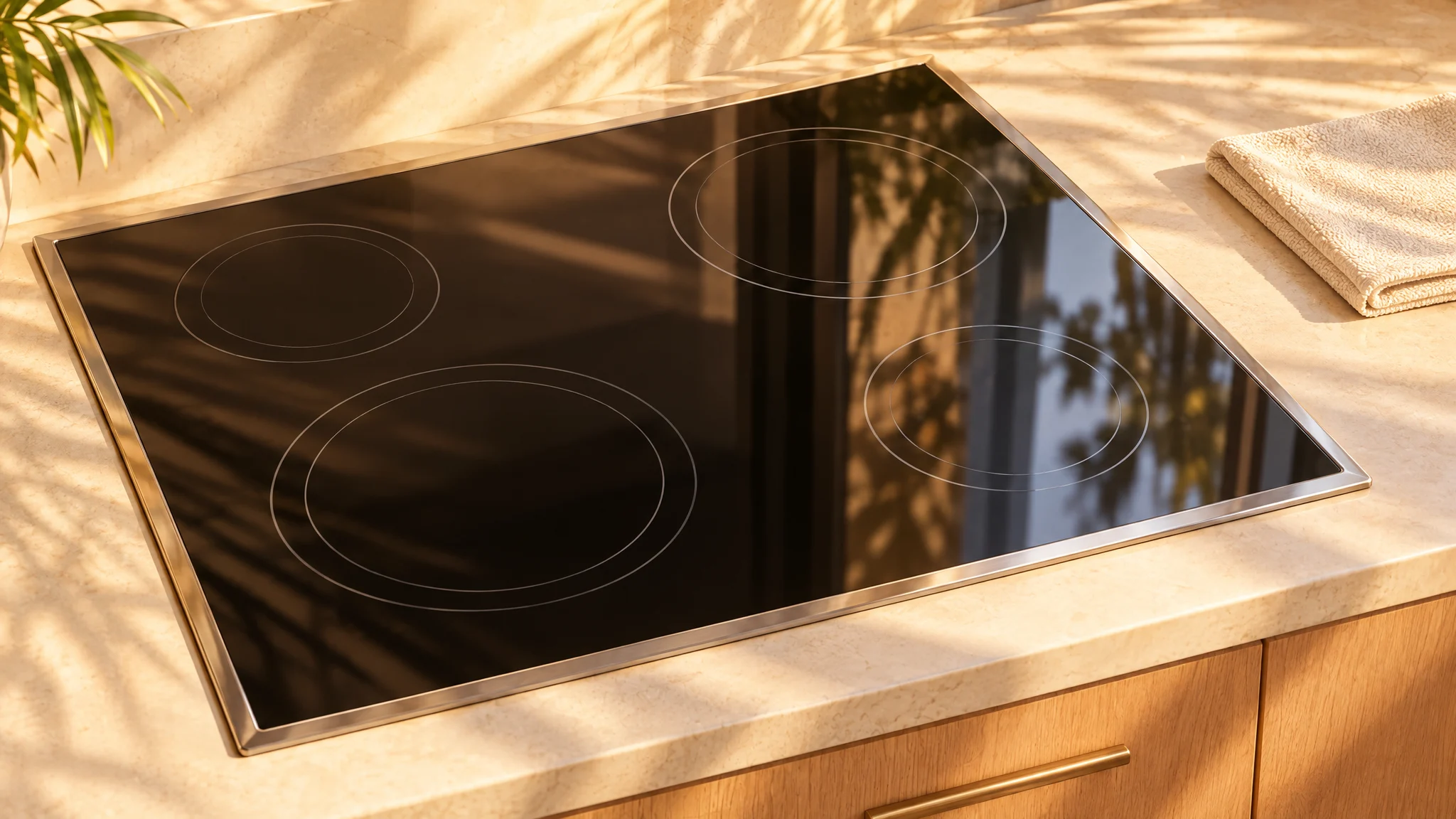
The ordinary-spill method
Follow the sequence, but let your own manual decide the products and tools.
Identify the glass and the problem
Find the model and care guide; check for a special coating. Inspect for cracks, pitting, or chips without touching damage. If you find damage, stop and contact the manufacturer or an appliance technician. Do not try to polish it away.
Keep the model's care page beside your cleaning kit. A black, smooth surface does not identify its coating.
Turn it off and let ordinary spills cool
Switch off every cooking zone and let ordinary spills cool. Do not test heat with your hand or put cleaning cream on hot glass. Damp wiping can cause steam burns. Fresh hot sugar or melted plastic is an exception; switch off and consult the model's urgent spill instructions immediately.
The method below is for ordinary food residue on intact glass, not an active hot-spill response.
Lift loose residue with a soft cloth
Follow the manual's light-cleaning method with a clean, soft cloth. If a damp wipe is allowed, wring the cloth out and lift loose food without grinding it into glass. Keep liquid away from controls and openings. Refold or replace a gritty cloth.
Use a scraper only if the manual permits it.
Treat stuck-on soil by the model's rules
Follow the approved cleaner's amount and contact time, using only permitted nonabrasive tools. GE's conventional glass method uses cooktop cream and its recommended pad; Whirlpool's WipeClean coating starts with water soaking and a soft sponge. Do not transfer times or techniques between finishes or add homemade mixtures to commercial cleaner.
If an approved repeat pass does not help, stop escalating pressure. Ask the manufacturer whether the mark is residue, metal transfer, or surface damage.
Remove the residue and inspect the finish
Finish with a fresh soft cloth as instructed. GE requires removing all cleaning-cream residue before heating again; Whirlpool's WipeClean guidance wipes detergent away with a warm, damp cloth. Dry and inspect the glass. A scratch or pit is not a stain to scrub away.
For future cooking, lift pans rather than sliding them, and keep their bottoms clean and dry. These habits reduce preventable marks and residue.
When the method changes
The same-looking glass can have a different finish, spill, or kind of damage.
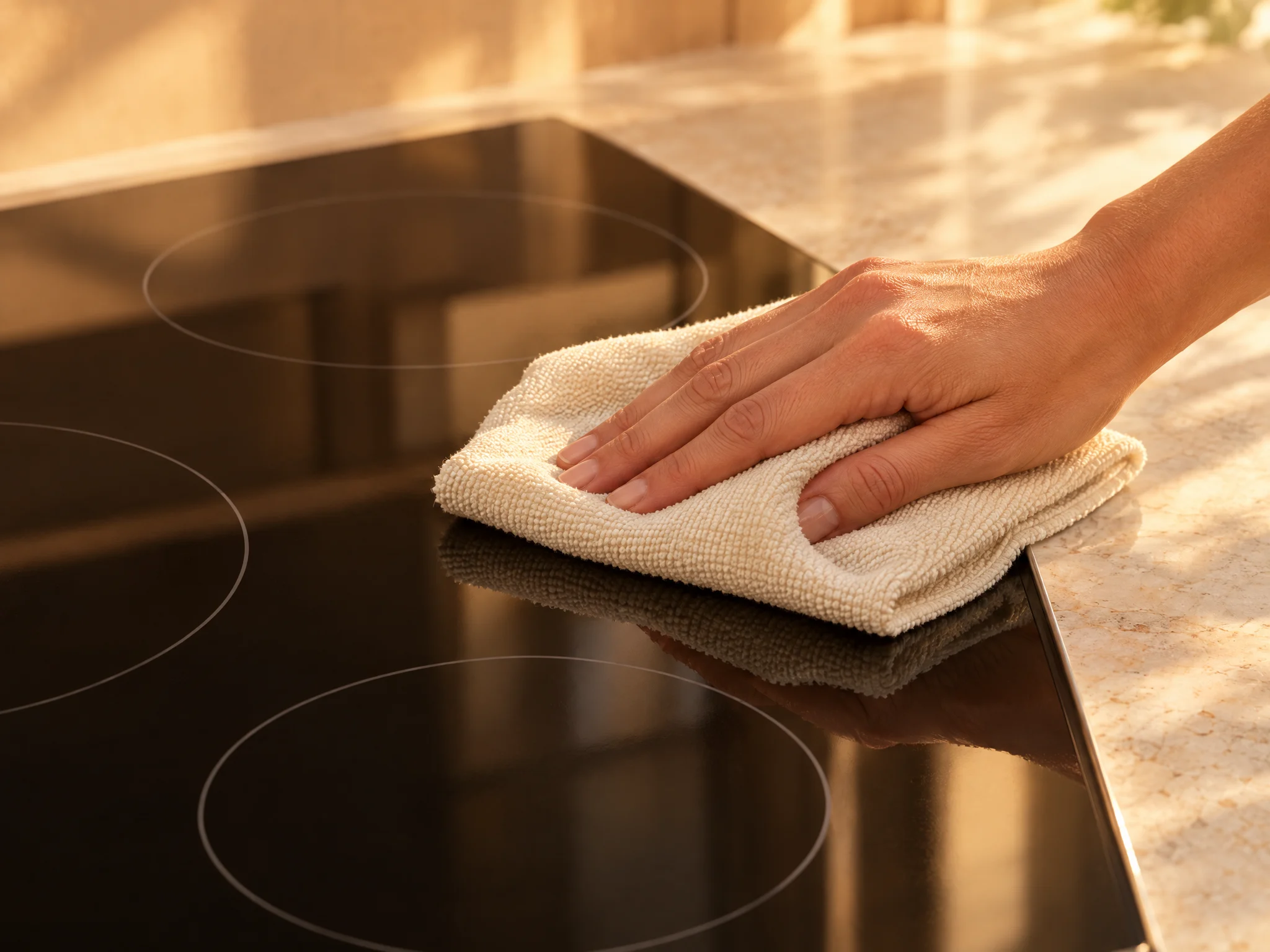
Conventional glass may allow scraping
Whirlpool describes a purpose-made scraper at about 45 degrees while conventional ceramic glass is warm, not hot, then waits for cooling before cleaner. GE's burned-residue method starts with cooled glass and cleaner. Those details differ; neither is a reason to improvise a blade on an unknown cooktop.
Whirlpool's conventional-glass method (opens in a new tab)A coating can rule that tool out
Whirlpool warns that scrapers can damage its WipeClean coating. Its instructions start with water on fully cool glass, allow at least five minutes of soaking for everyday soil, and use gentle wiping. Tough-soil options and detergent contact limits stay specific to that finish. Do not copy another brand's forceful scrubbing advice onto it.
Read the coating instructions (opens in a new tab)Stop for hot sugar or damaged glass
GE and Samsung distinguish fresh hot sugar from ordinary food spills because it can permanently damage glass. GE also flags melted plastic. Switch off the affected zones and consult your model's urgent spill guidance immediately. Follow its required heat protection and tool instructions; do not press an ordinary wet cloth onto hot glass. GE's spill instructions (opens in a new tab).
A scratch is not a removable food layer, and a crack or pit is not a cleaning project. GE says cracked or pitted glass needs service and recommends not using the cooktop until repair. Contact the manufacturer or a qualified appliance technician. A cleaning visit cannot promise replacement, crack repair, or scratch removal. GE's damage guidance (opens in a new tab).
Leave a clear LA kitchen handoff
For a Los Angeles rental or condo with a landlord-supplied appliance, ask the owner or property manager for the model and care guide before choosing a blade or strong cleaner. Photograph existing marks on cool glass and report cracks or pitting as maintenance, not a request for extra scrubbing. This is practical preparation, not a statement of rental-law requirements.
If your building uses a front desk, call box, or reserved service access, send that arrival note with the appliance instructions. Explain whether the priority is routine surface care or stuck-on food so the provider can confirm the work before the visit.
Need the whole kitchen reset?
La La Land Cleaning is an insured referral agency connecting LA clients with independent cleaning professionals. The accessible stovetop can be part of the agreed residential kitchen scope. Your quote reflects the home, condition, and requested tasks.
Inside-appliance cleaning and household interior glass/window cleaning are separately requested add-ons. A glass cooking surface is not a window-cleaning request, and routine care is not appliance repair.
Request a quoteGlass-stovetop questions
Start with the model, then the mark. No cleaner or tool is right for every finish.
Use your model's approved product. Conventional glass may use cooktop cream; coatings can require water-first care. 'Glass cleaner' does not establish compatibility. Whirlpool's WipeClean instructions exclude glass window cleaners.
No. GE and Whirlpool permit specific conventional-glass methods, but scrapers can damage Whirlpool's WipeClean coating. Follow your model's tool, temperature, and technique instructions. Never substitute a kitchen knife or scrape an unknown finish.
Samsung permits it for certain stains, not every brand or coating. Mixing the two is not automatically stronger. Follow your model's instructions, and do not add another cleaning product.
Use your model's approved cleaner and pad on intact, appropriately cooled glass. A permitted scraper may suit conventional glass, not every coating. Stop for damage or unsuccessful approved treatment. Cleaning cannot guarantee glass restoration.
Not as an ordinary spill. GE flags hot sugar and melted plastic; Samsung flags hot sugar. Switch zones off and consult your model's urgent instructions immediately, including required burn protection and tools. Keep skin and ordinary wet cloths off hot glass.
La La Land Cleaning can include the accessible stovetop surface within an agreed residential kitchen scope. Confirm the model, condition, care restrictions, and requested work before booking. Inside-oven and other inside-appliance cleaning are separately requested add-ons; household interior glass and windows are also add-ons. Surface cleaning does not include appliance repair or glass restoration.
Manufacturer care references
Reviewed October 11, 2026. These brand-specific examples explain the differences; follow your own model's current instructions. They are not universal permission to scrape or treat coated glass.
Photography illustrates home-care situations. It is not a record of a client visit.
- GE Appliances glass-cooktop care (opens in a new tab)
Covers daily care, burned residue, metal marks, and urgent sugar/plastic spills. GE's tools are not automatically safe for other brands or coatings.
- Whirlpool conventional ceramic-glass care (opens in a new tab)
Describes a dedicated scraper on a warm, not hot surface, followed by cleaner after cooling. Lists products to avoid and warns that not all stains can be removed.
- Whirlpool WipeClean coating instructions (opens in a new tab)
A separate coated-surface method. Starts with cool glass and water soaking, discourages scrapers, limits detergent contact time, and specifies gentle nonabrasive tools.
- Samsung electric-cooktop care (opens in a new tab)
Covers ordinary cool-surface care, dry pan bottoms, and hot sugar. Its baking-soda/vinegar option is model-specific.
- GE Appliances cracked or pitted glass guidance (opens in a new tab)
Says cracked or pitted cooktops need service and recommends not using the cooktop until repair. Its range guidance also covers the oven while that cooktop is damaged.