Skip to content
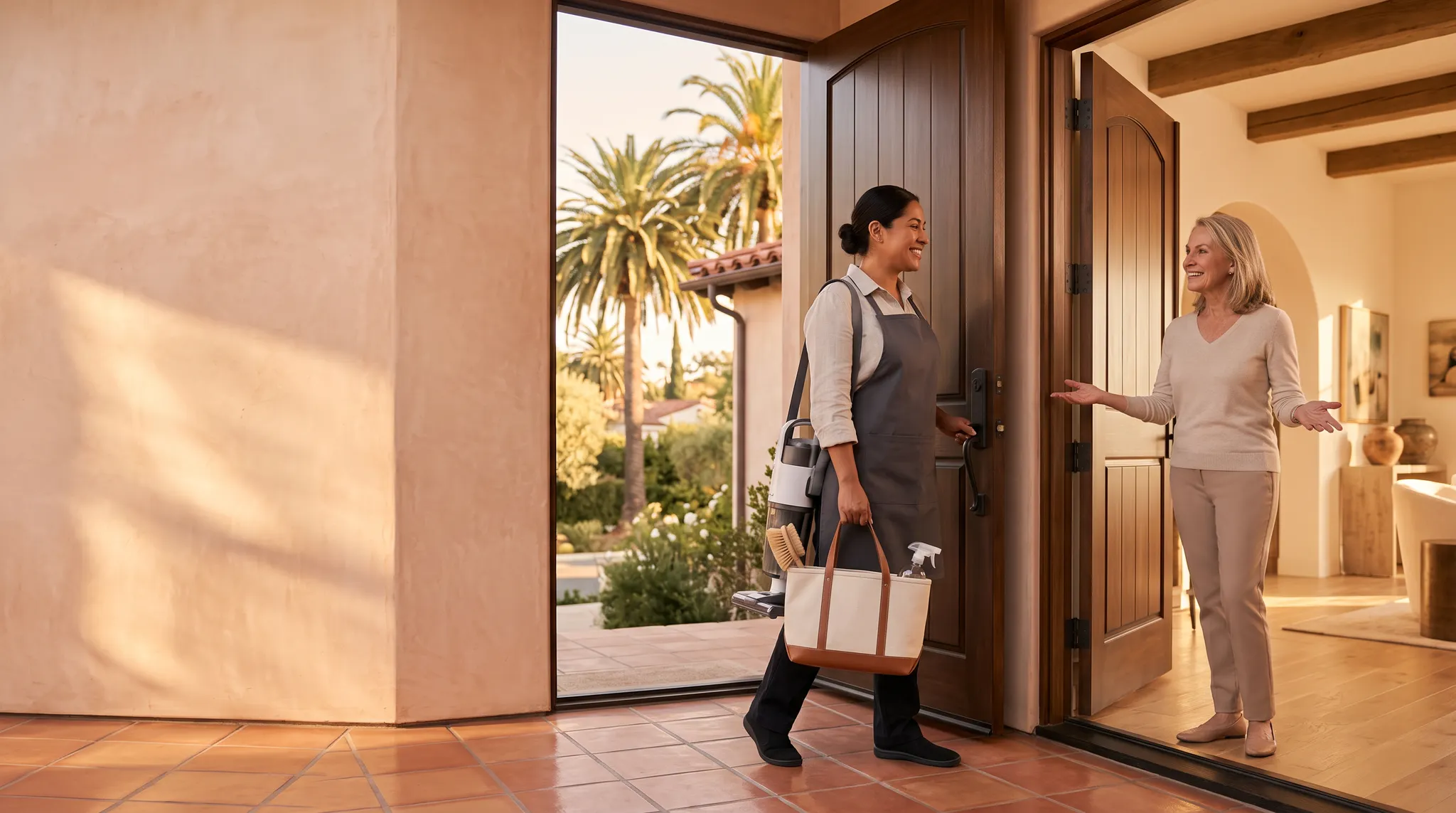
Homeowner welcoming a professional cleaner at a sunlit Los Angeles home

House cleaning etiquette guide

House cleaning etiquette for an easy visit

What to do before, during, and after a professional cleaning visit, without pre-cleaning, hovering, or leaving the cleaner to guess.

Get a Quote

The direct answer

Good house cleaning etiquette is simple: make access easy, communicate your priorities, protect pets and private items, then give the cleaner room to work. You do not need to pre-clean or supervise every task. Afterward, share specific feedback; tipping is optional.

Access

Make entry and lock-up unambiguous.

Priorities

Name what matters without micromanaging.

Feedback

Be prompt, respectful, and specific.

Good etiquette is a clean exchange of information

The homeowner provides access, context, and decisions. The cleaner brings the agreed work plan into the home. These three moments keep that exchange clear without turning the visit into supervision.

Before the door opens

Prepare the handoff

  • Send gate, parking, alarm, key, and lock-up instructions.
  • Clear loose items from the floors and surfaces you want cleaned.
  • Name priority rooms, rooms to skip, pets, and delicate finishes.

Do not pre-clean the rooms or leave an unranked list of extra tasks.

While the home is being cleaned

Protect the work window

  • Be reachable if a question affects the agreed scope.
  • Keep children, pets, and household traffic out of active work areas.
  • If you are home, settle in one room and agree on when it will be cleaned.

Do not follow the cleaner room to room or add surprise work without discussing time and scope.

After the final room

Close the loop clearly

  • Review the agreed priorities rather than expecting unstated extras.
  • Share specific praise or corrections while the visit is still fresh.
  • Confirm any change you want to the next recurring visit in writing.

Do not wait through several visits to mention a fixable preference.

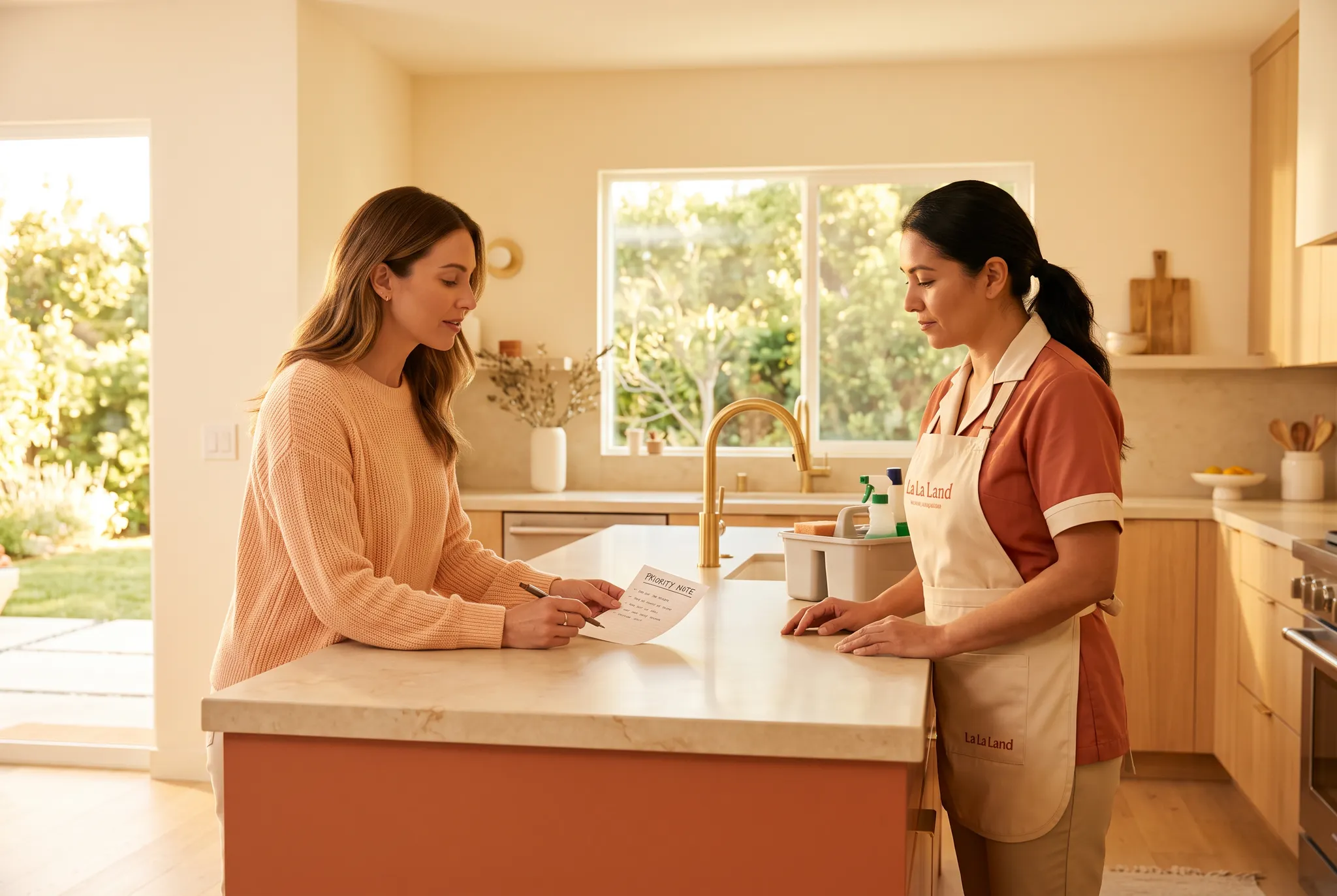
Homeowner and cleaner reviewing a short priority note in a sunlit kitchen

One short note beats constant direction

Put the useful details in one place before the visit: access, pets, priority rooms, rooms to skip, and surface-care notes. If the scope changes, ask before assuming the new work fits the original time or quote.

“Please focus on the kitchen and guest bath. Skip the office. The dog is in the back bedroom. Use the stone-safe product beside the sink on the marble.”

Need a fuller arrival checklist? Read how to prepare for a house cleaner.

Give the cleaner space without disappearing

Good etiquette does not require leaving the home. It requires a workable path through the agreed rooms and a reliable way to answer questions that affect the job.

Compare staying and leaving

You work from home

Choose one room as your base and agree on when it should be cleaned.

Children are home

Keep play and snack traffic away from wet floors, tools, and active rooms.

A pet is anxious

Use a secure, comfortable room and mark it clearly as closed.

You need to leave

Confirm entry, alarms, lock-up, and the best phone number before departure.

Feedback is part of the etiquette

A cleaner cannot act on a preference that was never shared. The kindest feedback is timely enough to help and specific enough to use.

Name the place

Identify the room, fixture, or surface instead of saying the whole visit felt off.

Name the result

Explain what you expected and what you would like changed next time.

Keep tipping separate

Tipping is optional. Do not use a tip in place of clear praise or a needed correction.

For tipping examples and special occasions, use the dedicated house cleaner tipping guide.

FAQ

House cleaning etiquette, answered

Practical answers about pre-cleaning, staying home, pets, feedback, and tipping.

Should I clean before a house cleaner comes?

No. You do not need to vacuum, mop, dust, scrub, or otherwise pre-clean. Pick up loose items that block the floors and surfaces you want cleaned, put away valuables and fragile belongings, secure pets, and leave clear access and priority notes.

Should I stay home while the cleaner works?

You can stay or leave, depending on your comfort and the agreed access plan. If you stay, keep the main work areas open and avoid following the cleaner from room to room. If you leave, confirm entry, alarms, pets, parking, lock-up, and how to reach you.

Is it rude to be in the same room as a house cleaner?

No, but it helps to avoid occupying a room while it is being cleaned. If you need to work from home, name the room you will use and agree on when it should be cleaned or skipped.

What should I do with pets during house cleaning?

Tell the cleaner about every pet before the visit. Keep animals that may be anxious, protective, or likely to escape in a secure, comfortable area, and clearly identify any room that should remain closed.

How should I give feedback to a house cleaner?

Be prompt, direct, and specific. Name the room or surface, describe the result you expected, and explain what you would like handled differently next time. Specific feedback is easier to act on than a general statement that the visit was disappointing.

Do I have to tip a house cleaner?

No. Tipping is optional. If you choose to tip, consider the effort, service experience, and what feels appropriate for your household. Clear thanks and specific positive feedback are also meaningful.

Should I offer food or drinks to a house cleaner?

You do not need to provide a meal. Making drinking water available is a considerate option, especially on a long visit, but it should not replace clear access, scope, and safety information.
Start the visit with a clear plan

Tell us about the home, your priorities, access, pets, and any confirmed add-ons. We’ll use those details to shape the scope before the visit.

Get a Quote