Routine crumbs or a fresh spill
Clean now
Remove the food around the area, wash with hot soapy water, rinse, and dry before restocking.
Decision 140°F
safe refrigerator target
4 hours
closed during an outage
Protect the cold chain first, then remove the shelves your manual allows, wash with hot soapy water, rinse, dry, and confirm the refrigerator returns to 40°F or below.
See the DecisionsThe direct answer
To clean a refrigerator safely, protect perishable food in a cooler, remove the shelves and drawers the manual allows, wash the interior with hot soapy water, rinse and dry it, then restock only after the refrigerator is holding 40°F or below.
Sources: USDA refrigeration guidance and FDA refrigerator food-safety guidance.
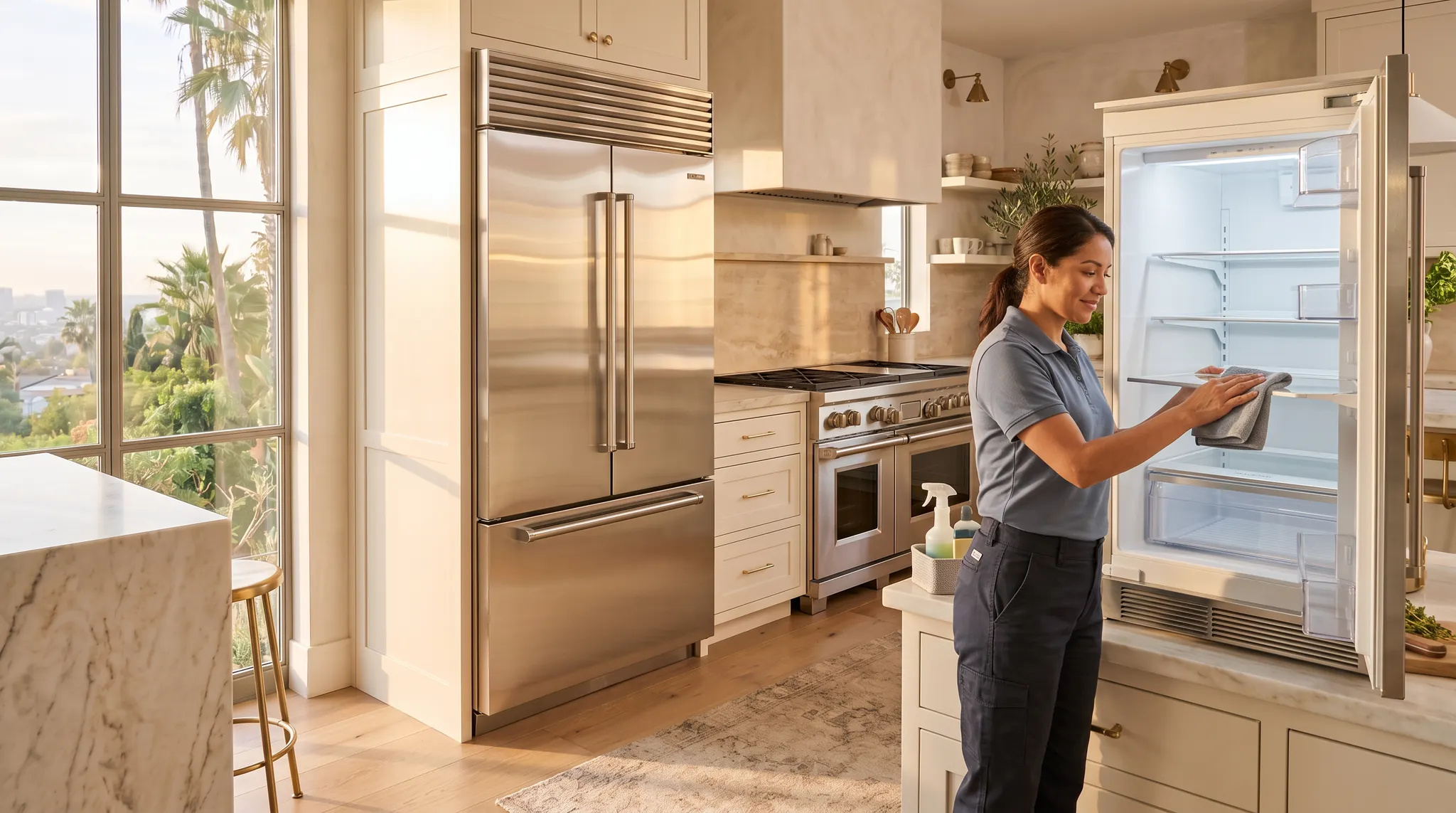
40°F
Cleaning is only half the job. Food safety depends on how long perishables are out, the refrigerator temperature, and whether a spill could cross-contaminate nearby food.
Routine crumbs or a fresh spill
Clean now
Remove the food around the area, wash with hot soapy water, rinse, and dry before restocking.
Decision 1Raw-meat drip or cross-contamination concern
Separate first
Remove nearby food, clean the spill immediately, and follow the appliance and product labels for any additional sanitizing step.
Decision 2Power has been out under four hours
Keep the door closed
An unopened refrigerator can keep food cold for about four hours. Check the appliance thermometer before deciding what stays.
Decision 3Perishables were above 40°F for more than two hours
Discard them
Do not taste food to judge safety. Use FoodSafety.gov's item-by-item outage chart when the time or temperature is uncertain.
Decision 4Outage source: FoodSafety.gov power-outage chart.
The sequence protects food first, then works from removable parts to the fixed interior and final temperature check.
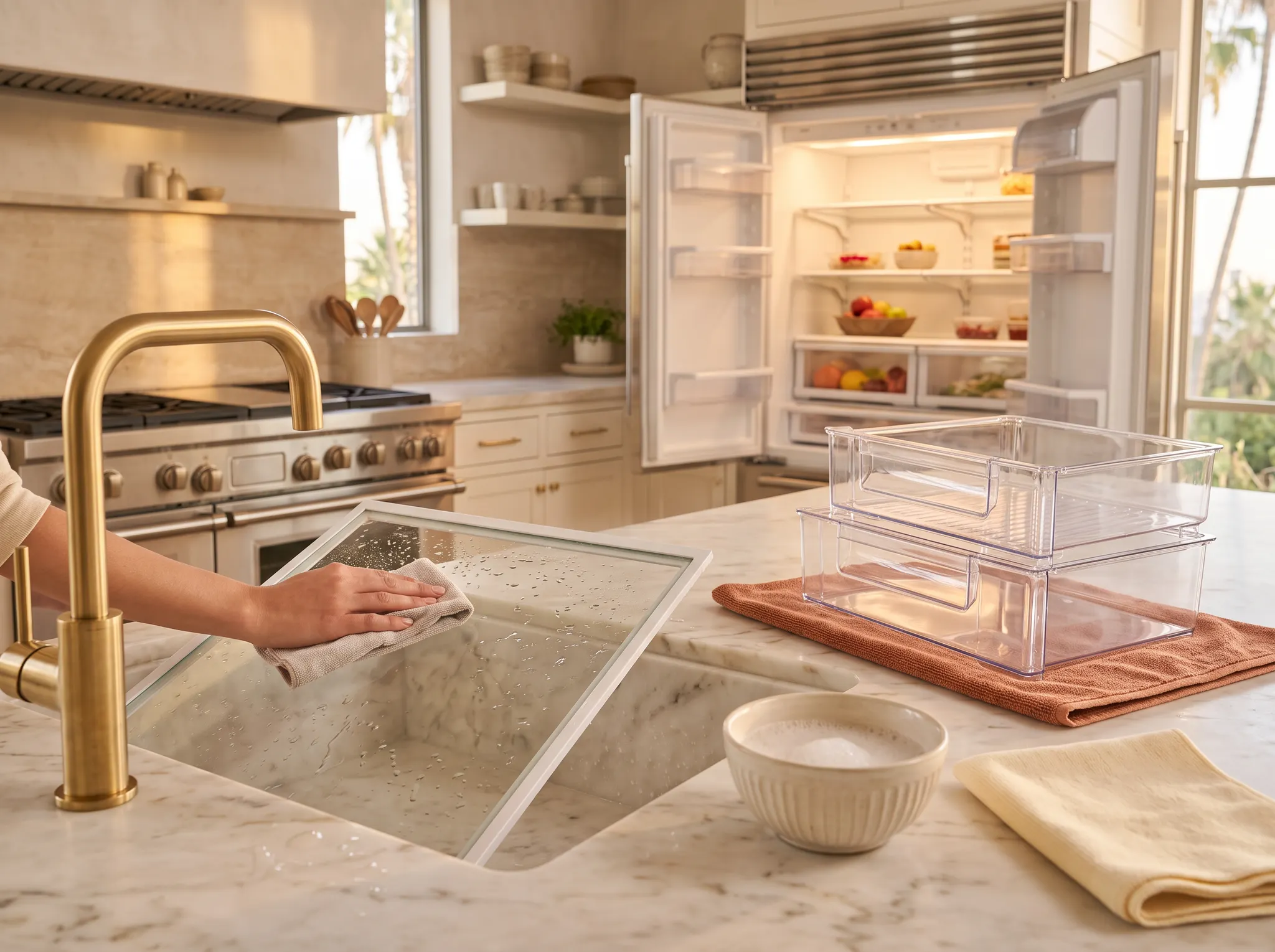
Move perishables into a cooler with ice or cold packs before the doors stay open. Keep food at 40°F or below and return it promptly when the interior is dry.
Discard questionable food, group the keepers, and remove shelves, bins, and drawers only as the appliance manual allows. Let cold glass warm gradually before washing it.
Use hot, soapy water for spills and interior surfaces, then rinse with a separate clean damp cloth. Keep excess water away from vents, lights, controls, and electrical openings.
Wipe the door seal, handles, shelf edges, and drawer tracks with a soft cloth. Check the manual before using a disinfectant or removing a water filter, ice maker part, or drip pan.
Dry every part, reinstall the shelves and drawers, return covered food, and confirm the refrigerator holds 40°F or below with an appliance thermometer.
Match the next move to the source. Odor, residue, gasket buildup, and appliance-service issues need different responses.
Remove questionable food, wash removable parts, clean the interior and gasket, then let the empty refrigerator air with the door open for about 15 minutes.
If spoiled-food odor remains, USDA notes that repeated cleaning and airing may be needed.
Lift loose debris first, then work warm soapy water into the track with a soft cloth or non-scratch brush.
Do not pry fixed trim or flood a channel that may drain toward electrical components.
Stop and check the manufacturer's care instructions before choosing a product. Clean the folds gently and dry them fully.
A cracked, loose, or persistently contaminated gasket may need appliance service or replacement.
Check hidden sources such as the drip pan, drain, ice maker, water filter, or spoiled food behind a drawer, using the model manual.
Water lines, sealed systems, electrical parts, and repairs belong with an appliance technician.
4 hours
with the refrigerator closed
During a Southern California outage, keep the refrigerator door shut. FoodSafety.gov says an unopened refrigerator keeps food safe for up to four hours.
FDA guidance also shortens the room-temperature window for perishable groceries to one hour when the air is above 90°F. In hot weather, stage a cooler before cleaning and do not leave groceries in the car.
At La La Land Cleaning, inside-refrigerator cleaning is an add-on. It is not automatically included with standard, deep, or move-out cleaning.
Interior shelves, drawers, walls, gasket, current condition, food handling, and whether the appliance will be empty.
Electrical faults, sealed systems, damaged gaskets, water lines, ice makers, refrigerant, repairs, or unsafe mold contamination.
FAQ
Food-safety thresholds, everyday cleaning methods, outage timing, and professional scope in one place.
Move perishable food into a cooler, remove loose shelves and drawers only as the manual allows, wash spills and interior surfaces with hot soapy water, rinse with a separate clean damp cloth, dry thoroughly, then return covered food after the refrigerator is holding 40°F or below.
USDA guidance includes vinegar and water or baking soda and water for persistent spoiled-food odors, but routine cleaning can begin with hot soapy water. Follow the refrigerator manufacturer's instructions because interior finishes, seals, ice makers, and water systems vary by model.
FDA guidance says perishable food should not remain at room temperature for more than two hours, or more than one hour when the air temperature is above 90°F. Use a cooler with ice or cold packs so the cleaning does not consume that safety window.
FoodSafety.gov says an unopened refrigerator keeps food safe for up to four hours. Keep the door closed, check the temperature, and discard refrigerated perishables after four hours without power or when they have been above 40°F for more than two hours.
Follow the appliance manual. Unplugging may be appropriate for coil cleaning, electrical access, or a full empty-unit clean, but it also stops cooling. Protect the food first and never handle electrical parts with wet hands or a wet cloth.
Inside-refrigerator cleaning is an add-on at La La Land Cleaning, not an automatic part of standard, deep, or move-out cleaning. Request it before the quote so the cleaner can plan for the food, shelves, current condition, and time needed.
See kitchen cleaning scopeShare the home size, beds and baths, current condition, whether the refrigerator will be empty, and any other appliance interiors you want quoted.
Insured referral agency serving Los Angeles households.