Carry
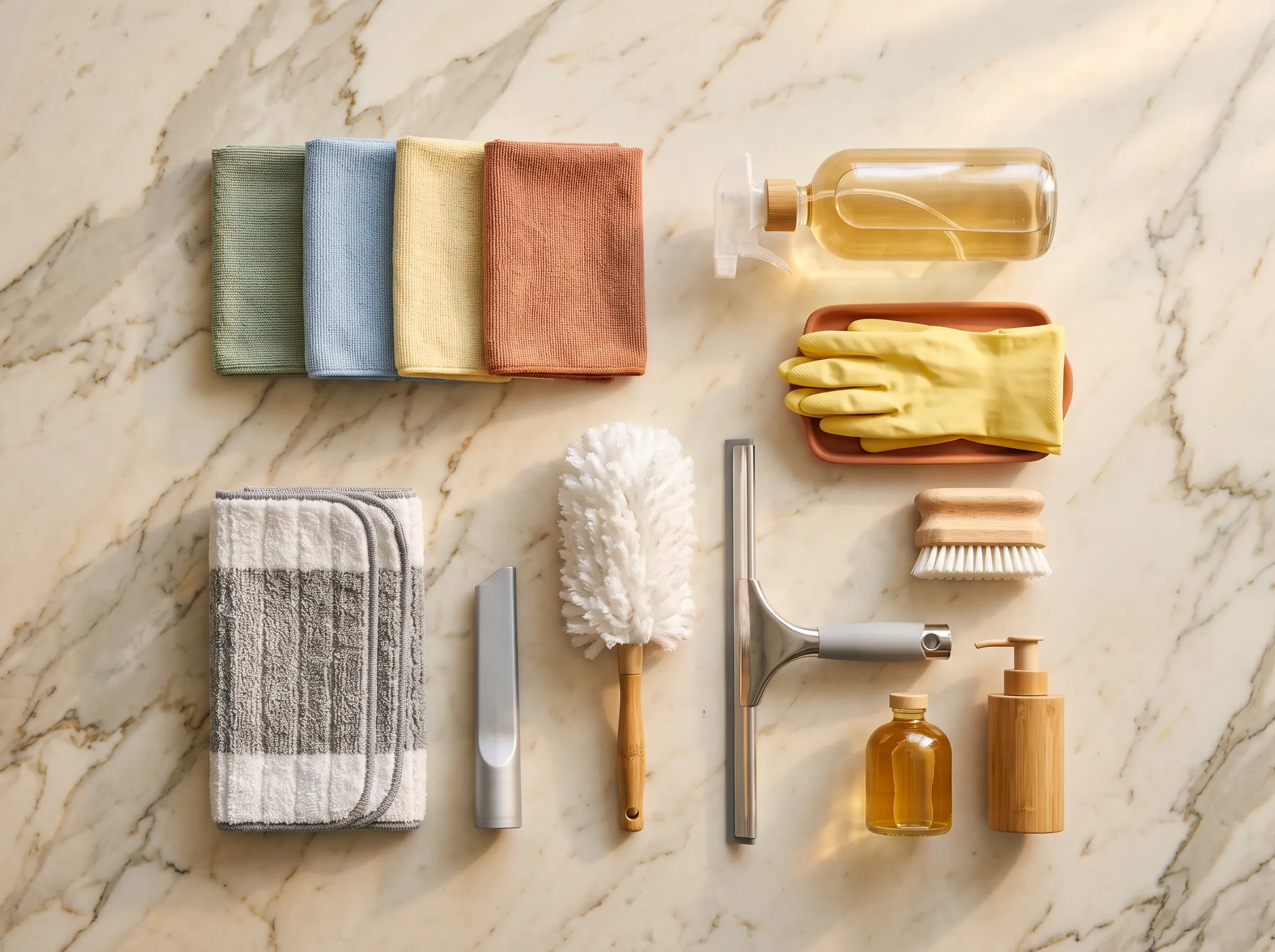
The everyday caddy
- All-purpose cleaner approved for the surface
- Mild dish soap
- Color-coded microfiber cloths
- Non-scratch sponge and soft brush
Enough for counters, fixtures, sealed hard surfaces, and quick spot cleaning.
A complete home cleaning kit starts with microfiber cloths, mild soap, a surface-safe cleaner, brushes, gloves, a vacuum, a duster, and floor tools—then adds specialty products only when the material or job requires them.
A room-by-room guide to the tools worth stocking, the products you can skip until needed, and the label rules that keep cleaning safer.

Start with versatile tools, then add only the products your home’s materials actually require. The result is easier to carry, store, and use safely.
Carry
Enough for counters, fixtures, sealed hard surfaces, and quick spot cleaning.
Dry work
Match the machine, attachment, and moisture level to the flooring manufacturer’s guidance.
Wet rooms
Keep toilet tools separate, and use a fresh cloth when moving from bathroom work to another room.
Only if needed
Do not assume one bottle is safe for natural stone, wood, stainless steel, and every coated finish.
The best supply is the one suited to the soil, material, and tool in front of you. Use this room map as a packing guide, then defer to product and manufacturer instructions.
| Room | Core kit | Optional add-ons | Before you use it |
|---|---|---|---|
| Kitchen | Microfiber cloths, mild dish soap, non-scratch sponge, floor tool | Glass cleaner, appliance-specific product, detail brush | Check stone, metal, and appliance care labels before use. |
| Bathroom | Gloves, dedicated toilet brush, cloths, soft scrub brush, squeegee | Grout brush or labeled disinfectant | Keep products ventilated and never mix cleaners. |
| Living + bedrooms | Vacuum attachments, duster, microfiber cloths | Lint roller or upholstery tool | Test unfamiliar products on a hidden area first. |
| Floors | Vacuum or broom plus a floor-appropriate mop or pad | Manufacturer-approved floor cleaner | Wood, stone, laminate, and tile can require different moisture and products. |
“Stronger” is not the same as safer or more effective. The product label and the surface maker’s care guidance should decide dilution, contact time, ventilation, protective equipment, and compatibility.
Wondering about a common DIY combination? Read what happens when baking soda and vinegar mix, including why fizz is not proof of stronger cleaning.
What arrives with the cleaner?
Who provides the vacuum and floor tools?
Which allergies, surfaces, or approved products matter?
Supply policies vary by provider. Read our guide to what house cleaners may bring, or share your home and scope details for an upfront La La Land Cleaning quote.
FAQ
Short answers for building a useful kit without overbuying or guessing at product safety.
A practical starter kit includes microfiber cloths, mild dish soap, a surface-appropriate all-purpose cleaner, a non-scratch sponge, a soft brush, gloves, a vacuum, a duster, a broom and dustpan, and a floor-appropriate mop or washable pad.
No. A small core kit can handle much of a home, but specialty materials and finishes may require a manufacturer-approved product. Natural stone, wood, coated metals, glass, and appliances should not be treated as interchangeable surfaces.
Not usually. CDC guidance says cleaning with soap and water can remove germs in most situations. When you do use a disinfectant, follow its label, ventilation, protective-equipment, and contact-time directions.
No. Never mix household bleach or disinfectants with other cleaners. CDC warns that mixing products can release vapors that are dangerous to breathe.
Policies vary. Confirm which products and equipment the cleaner will bring, then share any allergies, product restrictions, specialty surfaces, or preferred tools before the visit.
Confirm the planned scope before the appointment and flag specialty surfaces or approved products. La La Land Cleaning is an insured referral agency, and the exact products or equipment should be confirmed for the independent cleaning professional matched to the visit.