Skip to content

How to clean kitchen cabinets safely

A finish-first guide for Los Angeles homes, with gentle methods for painted, stained wood, laminate, and high-gloss cabinet exteriors.

Check Your Finish
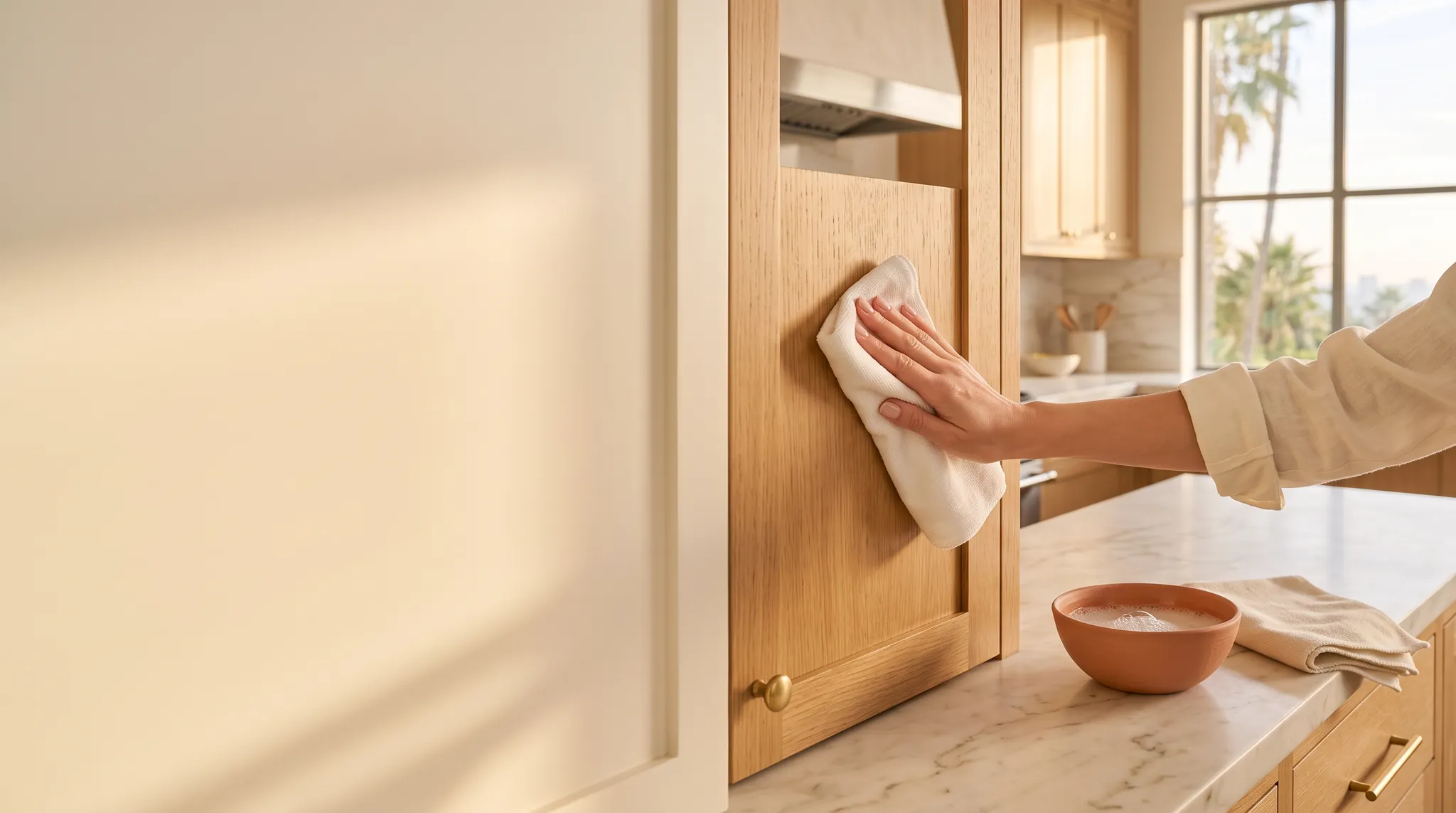
Warm Los Angeles kitchen with natural wood cabinets prepared for gentle cleaning

The direct answer

Start by identifying the cabinet finish and checking its care instructions. For many finished cabinet exteriors, the safest first pass is a soft lint-free or microfiber cloth dampened with warm water. If residue remains and the manufacturer allows it, use a small amount of mild dishwashing liquid, test a hidden spot, wipe gently, remove soap with a clean damp cloth, and dry the surface immediately.

Let the finish choose the method

Cabinet material and finish matter more than the color. When you cannot identify the finish, stop at gentle dusting and warm water until you can check the manufacturer or installer guidance.

Stained or clear-coated wood

Visible wood grain under a stain or clear protective finish.

Start here

Use a clean soft cotton cloth dampened with warm water. Add a manufacturer-approved mild cleaner only when water is not enough.

Avoid

Standing water, abrasive pads, powdered cleaners, and aggressive scrubbing along edges or joints.

Painted cabinetry

An opaque color covers the grain. Sheen may range from matte to glossy.

Start here

Dust first. Use mild soap, slightly warm water, and a soft sponge or cloth. Dab or wipe with light pressure, then rinse and dry.

Avoid

Magic Erasers, scouring pads, bleach, ammonia, alcohol, and cleaning paint before it has fully cured.

Laminate or thermofoil

A smooth manufactured surface, often with a consistent color or printed wood pattern.

Start here

Use warm water and a microfiber or soft cotton cloth. Follow the cabinet maker's product guidance for stubborn residue.

Avoid

Solvents, abrasives, acetone, concentrated alcohol, and moisture left around seams or edge banding.

High-gloss cabinetry

A reflective, mirror-like face that shows fingerprints and fine scratches easily.

Start here

Use a clean microfiber cloth with warm water, work out of direct sun, and dry with a second microfiber cloth.

Avoid

Paper towels, rough cloths, dry rubbing, and abrasive products that can leave visible micro-scratches.

A gentle response to sticky grease

Grease near cooking and food-prep areas can need more than a dry cloth. Increase cleaning strength slowly instead of jumping to a harsh degreaser.

Remove loose dust

Use a clean dry microfiber cloth, especially along door tops, trim, corners, and hardware. Wetting loose dust first can turn it into residue.

Read the finish guidance

Use the cabinet maker's care instructions when available. A method that suits sealed wood may not suit paint, foil, laminate, or a specialty finish.

Test a hidden area

Try the damp cloth and any approved mild solution inside a door edge or another inconspicuous spot. Let it dry before judging sheen or color change.

Work in small sections

Wipe gently around handles, beside the range, and near food-prep areas. Re-fold the cloth often so grease is lifted rather than spread.

Remove cleaner residue

Follow with a second clean cloth lightly dampened with fresh water when the product or finish guidance calls for a rinse.

Dry immediately

Use a soft dry cloth before moving to the next section. Pay close attention to seams, door edges, joints, and the areas around the sink and dishwasher.

Stop before cleaning becomes refinishing

A cleaning guide is not a repair guide. If the finish changes or the residue will not release gently, pause and ask the cabinet manufacturer, installer, painter, or a qualified refinishing professional.

  • Color transfers to the cloth
  • The sheen becomes cloudy or uneven
  • Paint feels tacky or soft
  • Edges begin to swell, lift, or separate
  • A scratch appears under light pressure
  • The residue needs scraping or heavy abrasion

When the cabinets belong in a Los Angeles cleaning brief

For a professional kitchen clean, name cabinet fronts, handles, visible grease, delicate finishes, and any care instructions in the request. Reachable exterior cabinet faces can be discussed within the agreed kitchen scope.

Cabinet interiors are different. At La La Land Cleaning, empty cabinet and drawer interiors are add-ons rather than automatic inclusions in standard, deep, move-in, or move-out cleaning. Request them before the visit so the quote reflects the extra opening, emptying, wiping, drying, and reset time.

See the Los Angeles kitchen cleaning guide for the full room scope, or use the cleaning supplies checklist to build a surface-aware kit.

FAQ

Kitchen cabinet cleaning, answered

Finish-safe answers about grease, painted cabinets, dish soap, upkeep, and professional cleaning scope.

What is the safest way to clean kitchen cabinets?

Identify the finish and check its care instructions first. For many finished cabinet exteriors, begin with a clean soft cloth dampened with warm water. If the maker allows it, use a small amount of mild dishwashing liquid for extra soil, test a hidden area, wipe gently, remove residue with a clean damp cloth, and dry immediately.

How do you clean grease off kitchen cabinets?

Dust first, then use the mildest finish-approved method that can lift the grease. Work in small sections with a soft cloth, re-fold the cloth often, rinse away cleaner residue when required, and dry the surface immediately. Stop if the color, sheen, paint, or edge banding changes.

Can you use dish soap on wood kitchen cabinets?

Some cabinet manufacturers recommend a mild dishwashing-liquid solution for finished cabinetry, but the correct method depends on the specific finish. Check the cabinet maker's guidance and test a hidden spot before cleaning the full surface.

Can you use a Magic Eraser on painted cabinets?

Benjamin Moore advises against abrasive sponges such as Magic Erasers on painted walls and cabinets because abrasion can affect the paint. Use a soft sponge or cloth, mild soap, and light pressure instead, then test before cleaning a visible area.

How often should kitchen cabinets be wiped down?

Wipe spills, splatters, and water promptly. For routine upkeep, focus on the high-contact and high-exposure zones near handles, the range, food-prep areas, the sink, and the dishwasher. The right cadence depends on how often the kitchen is used and the cabinet maker's care guidance.

Does La La Land Cleaning clean inside kitchen cabinets?

Cabinet interiors are an add-on at La La Land Cleaning rather than an automatic inclusion in standard, deep, move-in, or move-out cleaning. Request empty cabinet and drawer interiors before the visit so the quote and schedule reflect the added scope.

Sources reviewed

Cabinet-care guidance reviewed October 1, 2026. Your cabinet maker's current instructions take priority.

Put the finish notes in the quote

Share cabinet material, visible buildup, delicate areas, and whether you want exterior faces only or empty interiors added to the scope.

Get a Quote