Skip to content
CDC + EPA sourcedHome surface guideUpdated Sept. 10, 2026

Cleaning vs. sanitizing vs. disinfecting

Three words that sound interchangeable—but solve different problems. Use this home-surface guide to choose the right action, in the right order, without reaching for more chemistry than you need.

See the Difference

The short answer

Clean to remove. Sanitize to reduce. Disinfect to kill.

The sequence matters: clean first, then sanitize or disinfect only when the situation calls for it. Product labels determine the organisms, surfaces, and contact time a chemical is approved for.

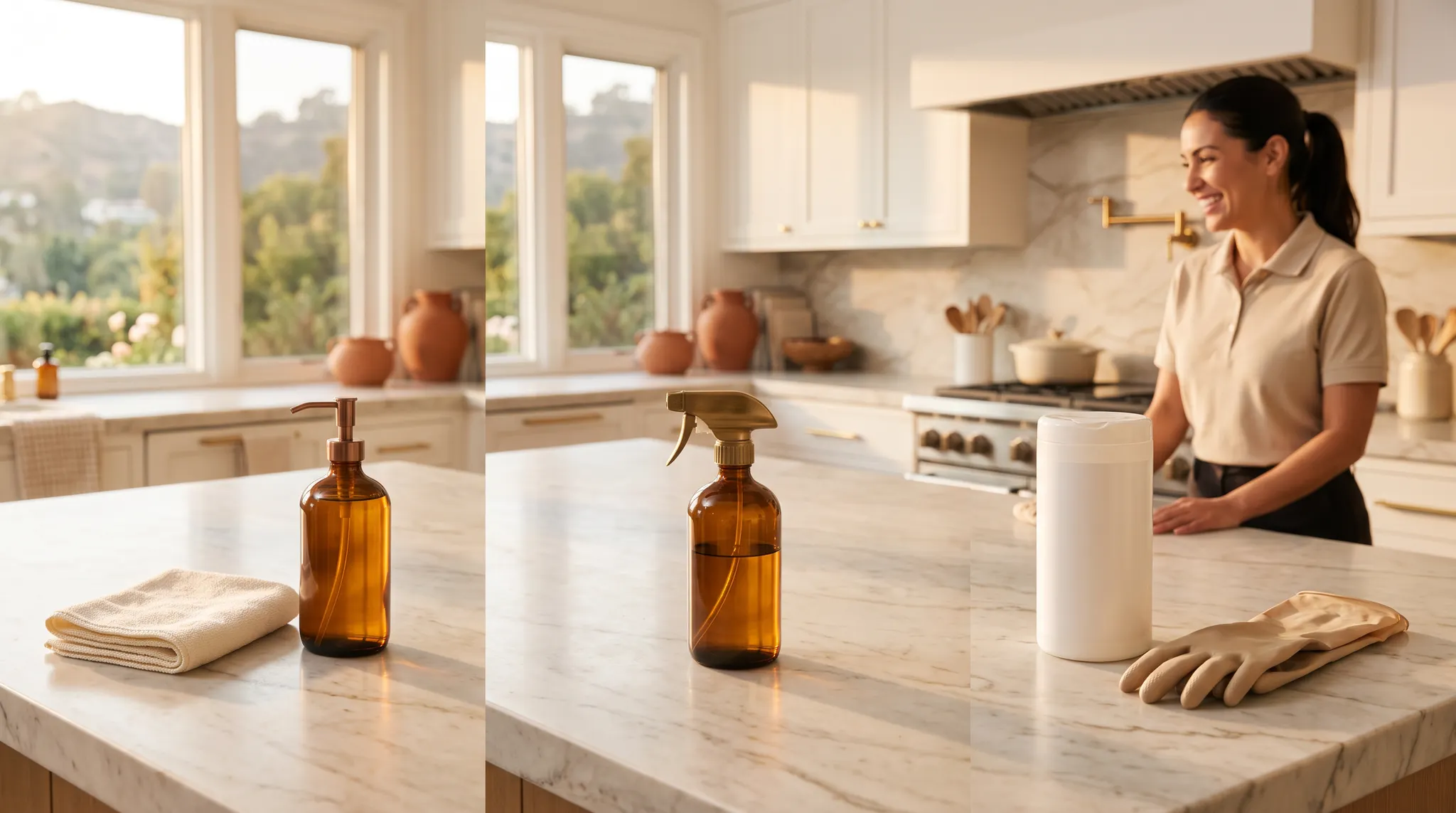
Three distinct surface-care setups on a sunlit marble island in a Los Angeles home

One surface. Three different jobs.

Treat these words as actions, not interchangeable product claims. Start with the outcome you actually need.

Remove

Clean

What it changes

Dirt, organic matter, and many germs

How it works

Soap or detergent, water, and physical action

Use it for

Routine home care and the required first step before the other two

In most homes, careful regular cleaning is usually enough.

Reduce

Sanitize

What it changes

Bacteria on surfaces to a level considered safe

How it works

An EPA-registered sanitizer used exactly as labeled

Use it for

Selected food-contact or household surfaces after cleaning

A sanitizer is not automatically tested to kill viruses.

Kill

Disinfect

What it changes

Viruses and bacteria listed on the product label

How it works

An EPA-registered disinfectant with its full contact time

Use it for

Higher-risk situations, such as illness in the home

The surface must stay wet for the label's stated contact time.

Choose by situation, not by the strongest-sounding word.

More chemistry is not automatically better home care. Match the action to the reason, then protect the surface and the people using it.

Everyday dust, crumbs, fingerprints, and tracked-in soil

Routine cleaning removes the material germs cling to and is usually sufficient for normal home care.

Clean

A food-contact surface needs a lower bacteria level

Use a surface-appropriate sanitizer only after cleaning, following every label direction.

Clean, then sanitize

Someone in the household is sick

CDC guidance identifies illness as a situation where disinfecting can further reduce spread.

Clean, then disinfect

You are unsure what a bottle is approved to do

Look for the surface, target organisms, preparation instructions, and required contact time before use.

Read the label

Before the cap comes off

The label is part of the method.

A product only works as claimed when it is used on the approved surface, at the stated concentration, for the required time. If the label and a shortcut disagree, follow the label.

Respect contact timeProtect the surface
  • Confirm the product is intended for the exact surface.
  • Clean visible soil before applying a sanitizer or disinfectant.
  • Use the dilution, ventilation, and protective steps on the label.
  • Keep the surface wet for the full labeled contact time.
  • Never mix cleaning or disinfecting chemicals.
  • Store products away from children and pets.

Home surface FAQ

The distinctions that matter

Clear answers about sequence, contact time, viruses, everyday frequency, and professional cleaning scope.

What is the main difference between cleaning, sanitizing, and disinfecting?

Cleaning removes dirt, organic matter, and many germs with soap or detergent. Sanitizing reduces bacteria on surfaces to levels considered safe under public-health standards. Disinfecting uses an EPA-registered product to kill viruses and bacteria named on its label.

Should I clean before sanitizing or disinfecting?

Yes. CDC guidance says to clean first because dirt and other impurities can make it harder for sanitizers or disinfectants to reach and kill germs. Follow the product label after the surface is visibly clean.

Do I need to disinfect my home every day?

Usually not. The CDC says regular cleaning is enough in most home situations. Disinfecting is more relevant when someone is sick or when a household member has a weakened immune system.

Does sanitizing kill viruses?

Do not assume it does. The EPA distinguishes surface sanitizers, which are tested to kill bacteria, from disinfectants, which are tested against viruses and bacteria. Use the exact claims on the product label.

What does contact time mean?

Contact time is how long a surface must remain visibly wet for a sanitizer or disinfectant to work as tested. The required time varies by product, so the label—not a generic rule—is the source of truth.

Can La La Land Cleaning sanitize or disinfect as part of a visit?

Cleaning is the foundation of our residential service. If you want a specific sanitizing or disinfecting step, mention it when requesting your quote so the surface, product, scope, and expectations can be confirmed before the visit.

Request a tailored quote

Start with a clean home—and a clear scope.

Tell us your home size, rooms, current condition, and any specific surface-care request. We’ll help separate routine cleaning, deeper detail work, add-ons, and anything that needs to be confirmed before the visit.

Get a Quote