How to clean fabric lampshades
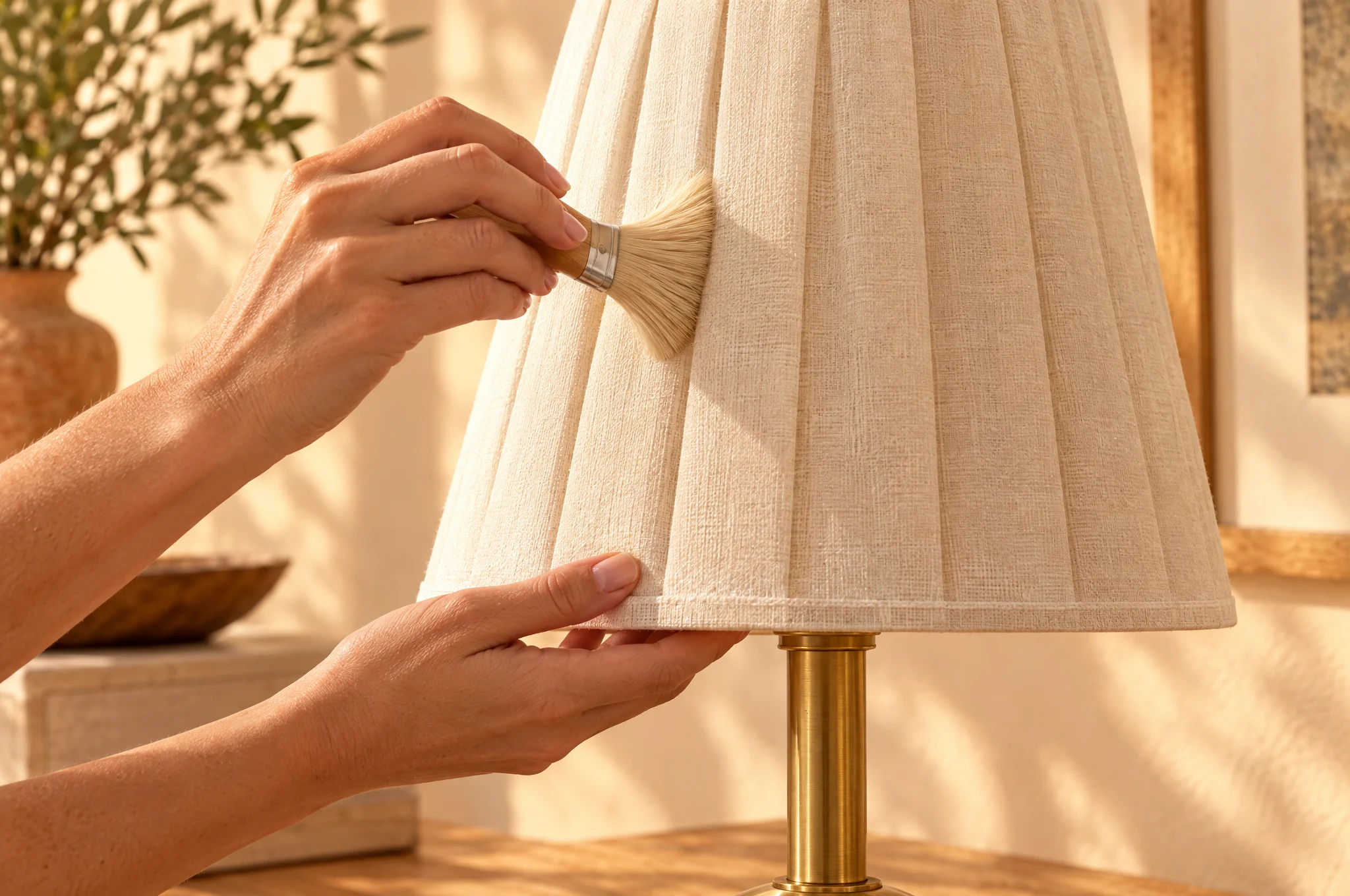
For Los Angeles homes. Unplug the lamp, let the bulb and shade cool, and remove ordinary dust with a clean, soft brush or dry microfiber cloth. Follow the pleats without pressing on the fabric. Use a low-suction upholstery brush only on a sturdy shade whose care instructions allow it. Do not assume that linen, cotton, or a glued shade can be washed; check the exact shade's instructions before using water or cleaner.
Avoid the MistakesFive mistakes to leave behind
Ordinary dust needs a light touch, not a stronger cleaning product.

Care for the construction, not just the cloth.
This guide concerns removable fabric shades on safely reachable table or floor lamps. Installed glass, metal, and LED fixtures have their own finish and power rules.
Starting while the lamp is warm
A quick wipe still puts your hands close to the bulb and fittings. Do not begin with the lamp plugged in or the shade still warm.
Try this instead. Unplug a portable lamp and wait for the bulb and shade to cool. If removing the shade is necessary, follow its fitting instructions and hold the rigid fitting or frame rather than squeezing the fabric.
Using a bare vacuum nozzle
Strong suction or hard plastic pressed against the shade can dent it. A sturdy fabric shade and a delicate silk shade do not need the same treatment.
Try this instead. For a robust shade that permits vacuum care, fit the soft upholstery brush, use the lowest suitable suction, and make light passes. Skip vacuuming fragile fabric, loose trim, or damaged seams. A soft hand brush gives you more control.
Scrubbing across the pleats
Pulling sideways or rubbing hard can disturb the folds. A dirty brush can also bring residue from another cleaning task onto the shade.
Try this instead. Use a clean, soft paintbrush or makeup brush reserved for dry dusting. Following Pooky's pleated-shade guidance, draw it gently down the length of each fold, then check the accessible inside edge without forcing the shape.
Treating a fabric label as wash permission
The textile is only part of the shade. Glue, lining, printing, and trim also determine whether a damp clean or a bath is suitable.
Try this instead. Find the brand and care instructions for the complete shade. Leave an unknown shade dry. Pooky advises against full immersion for delicate silk or glued pleated shades; instructions for a different washable model are not a substitute.
Chasing a stain with stronger cleaner
A wet patch can leave a watermark, dye transfer, or a conspicuous clean spot. Scrubbing harder does not establish that the treatment is safe.
Try this instead. Remove loose dust first, then stop and ask the maker about the specific stain. Use a stain treatment only when approved, testing an inconspicuous area as directed. Fragile, valuable, or persistently stained shades may need specialist assessment or replacement, not another household spray.
Before you add water
A linen or cotton cover does not make the assembled shade washable. Find the care instructions for the shade itself, including its lining, seams, adhesive, dye, and trim. If that information is missing, stay with gentle dry dusting or ask the maker.
Pooky's pleated-shade guide permits deeper washing for robust washable fabric, but excludes full immersion for delicate silk or glued pleated shades. Its patterned-shade guidance favors dry dusting for most printed fabric shades.
The Hashira maintenance guide includes wet methods for that lamp range, even though its fabric is glued to the frame. That is a model-specific example of why neither "all glued shades are washable" nor "all glued shades can never be washed" is a useful rule.
If your maker approves washing
Use its exact cleaner, temperature, removal, and drying instructions. Keep the lamp base, cord, socket, and other electrical parts out of the wash. Test any approved treatment as directed, stop if the fabric or color changes, and let the shade dry completely before refitting and restoring power.
If dry care leaves a stain behind, that is a reason to check the next method, not to increase the pressure.
In LA, ash changes the task
If a Los Angeles home has wildfire ash or soot on a fabric shade, do not treat it as ordinary lint. Set aside the brushing routine and get cleanup guidance for the affected belongings before handling them further.
LA County Public Health warns that indoor ash and smoke can pose health risks. Its fire-cleanup guidance recommends HEPA-filter vacuuming and addresses washing or disposing of contaminated porous items. That is not permission to put a delicate lampshade in water.
A porous shade may need specialist assessment, appropriate cleaning, or replacement. Follow local health instructions. An ordinary house-cleaning quote does not establish smoke- or ash-remediation capability.
Fabric-shade questions
Washing, pleats, stains, and the limits of an ordinary cleaning visit.
Can I wash a fabric lampshade in water?
Only when the instructions for the complete shade permit it. Fabric, lining, adhesive, printing, and trim all matter. Some robust washable shades have a wet-cleaning method, but Pooky cautions against fully immersing delicate silk or glued pleated shades. Keep an unidentified shade dry until the manufacturer confirms a method.
How do I clean a pleated lampshade?
Unplug the lamp and let it cool. For ordinary dust, use a clean soft brush or dry microfiber cloth with gentle top-to-bottom passes along each pleat. A small clean paintbrush can reach the folds. Avoid pulling across them, pressing hard, or vacuuming delicate fabrics and loose trim.
Is a lint roller safe on a fabric lampshade?
Not automatically. The Hashira maintenance guide allows a light lint-roller pass on its fabric shades, but that is not approval for every silk, printed, aged, or fragile shade. Follow the maker's instructions, avoid heavy pressure, and stop if the roller pulls fibers or trim. A soft dry brush is a more conservative starting choice for an unknown shade.
How do I remove stains or yellowing from a lampshade?
First separate loose surface dust from discoloration that remains after gentle dry care. Do not promise that a stain or yellowing will wash out. Ask the manufacturer which treatment suits the fabric and construction. Moisture can leave marks or affect dye; a valuable or fragile shade should be assessed by a suitable specialist before stain removal.
How often should I dust fabric lampshades?
Check them during your normal room-cleaning routine. Pooky recommends light dusting every one to two weeks for its gathered and pleated fabric shades. Use that as a manufacturer reference, not a rule for every shade. Follow your own care instructions and adjust for visible ordinary dust. Suspected wildfire ash or soot needs separate cleanup guidance.
Can La La Land Cleaning clean my lampshades?
Ask about the particular shade before booking. La La Land Cleaning is an insured referral agency connecting Los Angeles clients with independent cleaning professionals. Share photos, material and maker details, access, and whether you want ordinary dusting or stain treatment. Delicate-shade restoration, wet washing, electrical work, and smoke or ash remediation are not assumed parts of a standard home-cleaning visit.
Read the care notes
Reviewed October 8, 2026. Manufacturer guidance varies by shade construction. These sources inform ordinary care and its limits; follow your own shade's instructions.
Photography illustrates home-care situations. It is not a record of a client visit.
- Pooky, gathered and pleated fabric-shade care (opens in a new tab)
Soft top-to-bottom brushing, low-power upholstery attachments for suitable fabrics, and different treatment for delicate silk and glued construction.
- Pooky, patterned fabric-shade care (opens in a new tab)
The care FAQ favors dry dusting for most printed fabric shades and warns about dye, warping, and prolonged sunlight. It does not establish washability for another maker's shade.
- Hashira lamp-range maintenance guide (opens in a new tab)
Model-range guidance on handling by the fitting, ordinary dry care, possible watermarks, approved wet methods, even drying, and complete drying before reassembly. Its washing instructions are not a universal fabric-shade recipe.
- Los Angeles County Public Health, cleanup after a fire (opens in a new tab)
Local health guidance distinguishes ash and smoke cleanup from routine household dusting, recommends HEPA-filter vacuuming, and addresses contaminated porous belongings.