Flat or matte
Low sheen; marks and burnishing show easily
Dust, then test plain warm water in a hidden spot.
Barely damp cloth, very light pressure, no repeated scrubbing.
Dust first, identify the paint sheen, test a hidden area, and begin with the mildest method. This guide shows when plain water is enough, when mild soap belongs, and when to stop.
Check the Finish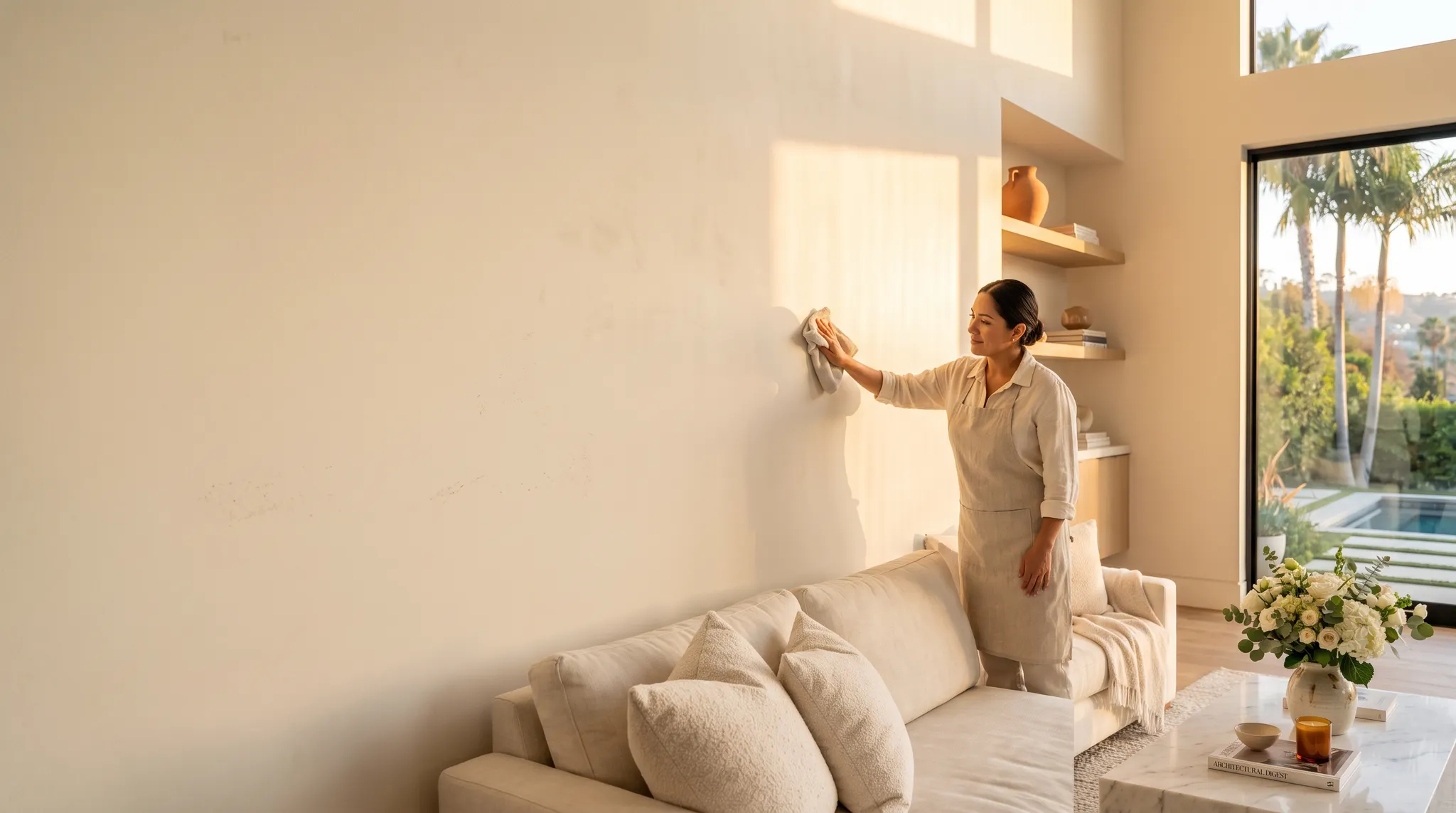
Higher-sheen paint is generally easier to wash. Flat, matte, and lower-sheen finishes can show burnishing, color loss, or dull spots when they are scrubbed.
Low sheen; marks and burnishing show easily
Dust, then test plain warm water in a hidden spot.
Barely damp cloth, very light pressure, no repeated scrubbing.
Soft sheen; somewhat more washable than matte
Start with warm water, then add a small amount of mild dish soap only if needed.
Work gently in small sections and blot dry.
Noticeable sheen; common in busy rooms
Use a soft sponge or microfiber cloth with warm water and mild soap.
Gentle circular passes are usually suitable after a spot test.
Reflective, smoother finish; often used on trim or moisture-prone areas
Dust first, then wash with a soft cloth and mild soapy water.
Still avoid abrasive pads, harsh solvents, and soaking the surface.
Paint-care sources: Benjamin Moore and Sherwin-Williams.
The order protects the finish: identify, dust, test, wash, then rinse. Do not skip the dry and hidden-area checks.
Check whether the wall is flat, matte, eggshell, satin, semi-gloss, or gloss. Lower-sheen paint needs the gentlest handling.
Use a clean microfiber cloth or vacuum brush attachment to remove loose dust, cobwebs, and grit that could smear or scratch.
Try plain warm water on a hidden area. Let it dry and check for color transfer, dulling, or a visible change in sheen.
Use a well-wrung soft cloth or non-abrasive sponge in small sections. Starting low helps limit long drip marks and streaks.
Wipe away soap with a separate clean damp cloth, then blot excess moisture with a soft towel instead of rubbing the finish.
Escalate slowly. The goal is to remove the mark without changing the wall around it.
Begin with a dry microfiber pass. If a mark remains, use plain warm water before adding soap.
Use warm water with a small amount of mild dish soap after testing the finish. Keep the cloth well wrung out.
Stop before escalating. Stronger products and abrasion can remove paint or spread the stain. Check the paint maker's guidance or call a specialist.
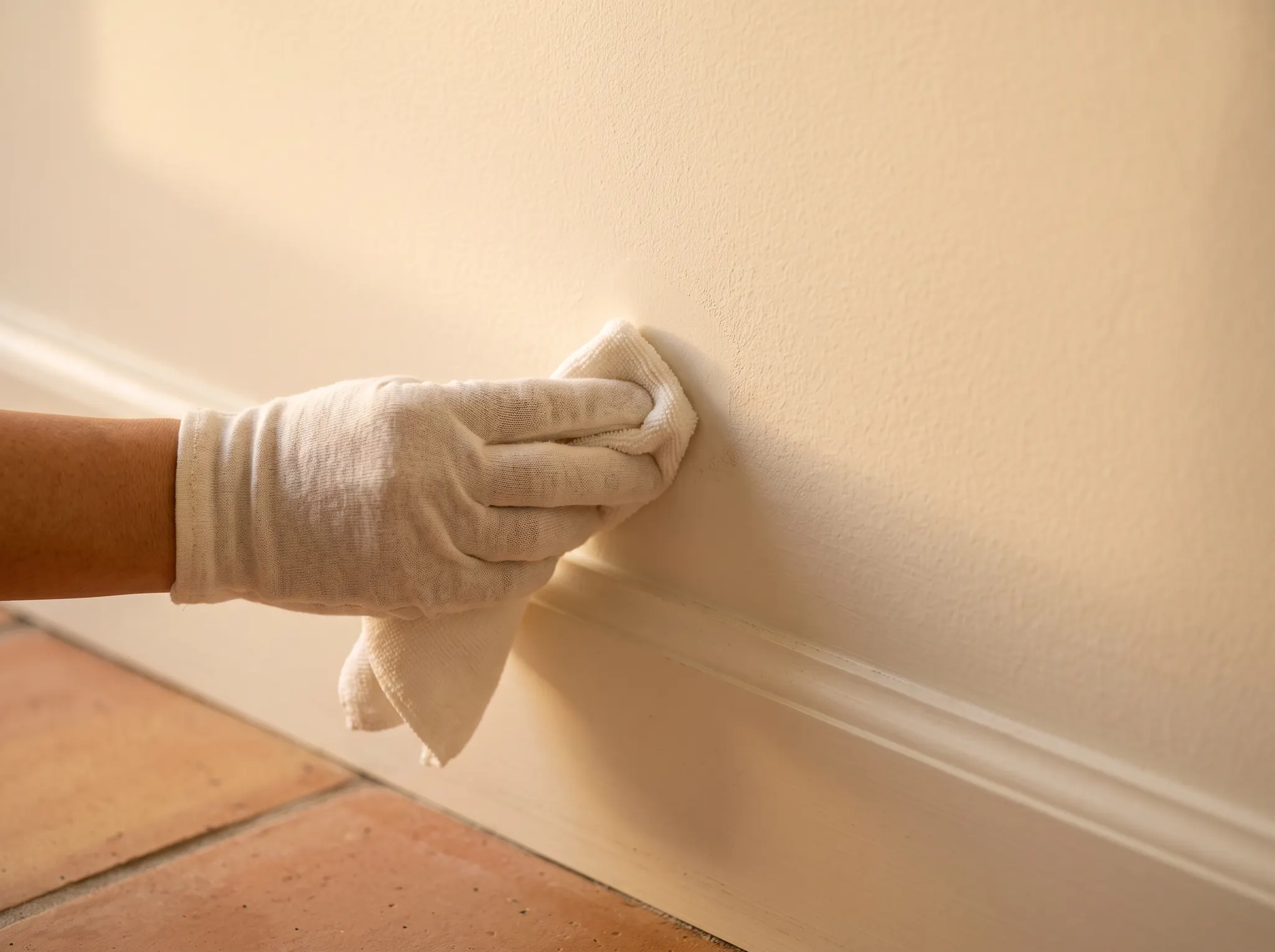
Pause if the cloth picks up paint, the sheen turns dull or shiny, the wall feels soft, or repeated wiping is spreading the stain.
Chipping or peeling paint needs a different plan. In homes built before 1978, EPA guidance calls for extra care around deteriorating paint and lead dust. Do not turn routine wall washing into sanding, scraping, or renovation work.
Source: U.S. EPA lead-safe home guidance.
FAQ
Clear answers about paint sheen, washing order, new paint, and professional cleaning scope.
Start with plain warm water on a soft microfiber cloth or non-abrasive sponge. If that does not lift the soil, add a small amount of mild dish soap. Always test a hidden area first and keep the cloth well wrung out.
Identify the paint sheen, dust first, spot-test the method, use the least aggressive cleaner that works, and avoid soaking or hard scrubbing. Flat and matte finishes need especially light pressure because they can burnish or lose color more easily.
Dust from top to bottom, but wash painted walls from the bottom up in small sections. Beginning low helps keep cleaner from running down a dry wall and leaving long streaks. Rinse each section as you go.
Use caution. Melamine foam is mildly abrasive and can change the sheen or remove color, especially on flat, matte, or dark paint. Test in a hidden area first, or choose a soft cloth with water and mild soap.
Dry paint is not always fully cured. Cure time varies by product and conditions, so follow the paint manufacturer's instructions before washing. Benjamin Moore advises waiting until the paint is fully cured and gives 30 days as a minimum for its cited care guidance.
Wall washing is not automatically included in every standard cleaning. The scope can depend on wall height, paint finish, condition, access, and the amount of detail work. Ask for it specifically when requesting a quote so the method and boundaries are clear.
See what house cleaners doTell us the room, wall height, paint finish if known, current condition, and whether you need spot-cleaning or a broader wash. We will clarify the reachable scope before the visit.
Insured referral agency serving Los Angeles households.