Skip to content

A Los Angeles home-care comparison · Reviewed October 13, 2026

Cleaning vinegar vs white vinegar

They are the same acid at different strengths. Distilled white vinegar is usually 5% acetic acid and sold as food. Cleaning vinegar is usually 6% and labeled for cleaning, and many are not made to food standards, so keep it out of recipes unless the label says otherwise. The extra point of acid helps a little with scale and soap scum, but neither one is a disinfectant, and both can etch natural stone.

5%

Distilled white vinegar

Typical acid strength. Sold as food.

6%

Cleaning vinegar

Typical acid strength. Labeled for cleaning.

What each label actually tells you

Read the percentage, the intended use, and the handling warnings before the brand name.

Acid on the label

Distilled white vinegar
Commonly 5%. FDA labeling guidance sets a 4% floor for anything sold as vinegar.
6% cleaning vinegar
6% on common products such as Heinz Cleaning Vinegar.
20–30% concentrates
Often 30%. Read the exact percentage before you open it.

Sold for

Distilled white vinegar
Food and household use.
6% cleaning vinegar
Cleaning. Many are not made to food standards, so skip cooking unless the label says food safe.
20–30% concentrates
Industrial, outdoor, or concentrate use as the label states.

Where it lives

Distilled white vinegar
The pantry is fine.
6% cleaning vinegar
A cleaning shelf away from food vinegar, with any spray bottle labeled.
20–30% concentrates
Locked up, as the safety data sheet directs.

Handling

Distilled white vinegar
Keep it out of eyes and rinse with water if it splashes.
6% cleaning vinegar
One 6% safety data sheet lists skin and serious eye irritation. Gloves are sensible.
20–30% concentrates
30% safety data sheets carry a Danger signal for severe skin burns and eye damage.

Example dilution

Distilled white vinegar
Kohler suggests 50/50 with warm water for faucet mineral buildup.
6% cleaning vinegar
Heinz directions start at ½ cup per gallon of water for general cleaning.
20–30% concentrates
Dilute only as that product's label directs.

Disinfects surfaces?

No. The American Cleaning Institute says vinegar is not a disinfectant and will not match an EPA-registered product.

Natural stone and hardwood

Keep all three off marble, granite, stone tile, and hardwood floors or furniture.

Mix with bleach?

Never. Acids and bleach can release dangerous vapors.

Percentages and directions vary by brand. These are examples from the sources below, not a guarantee of what any bottle contains.

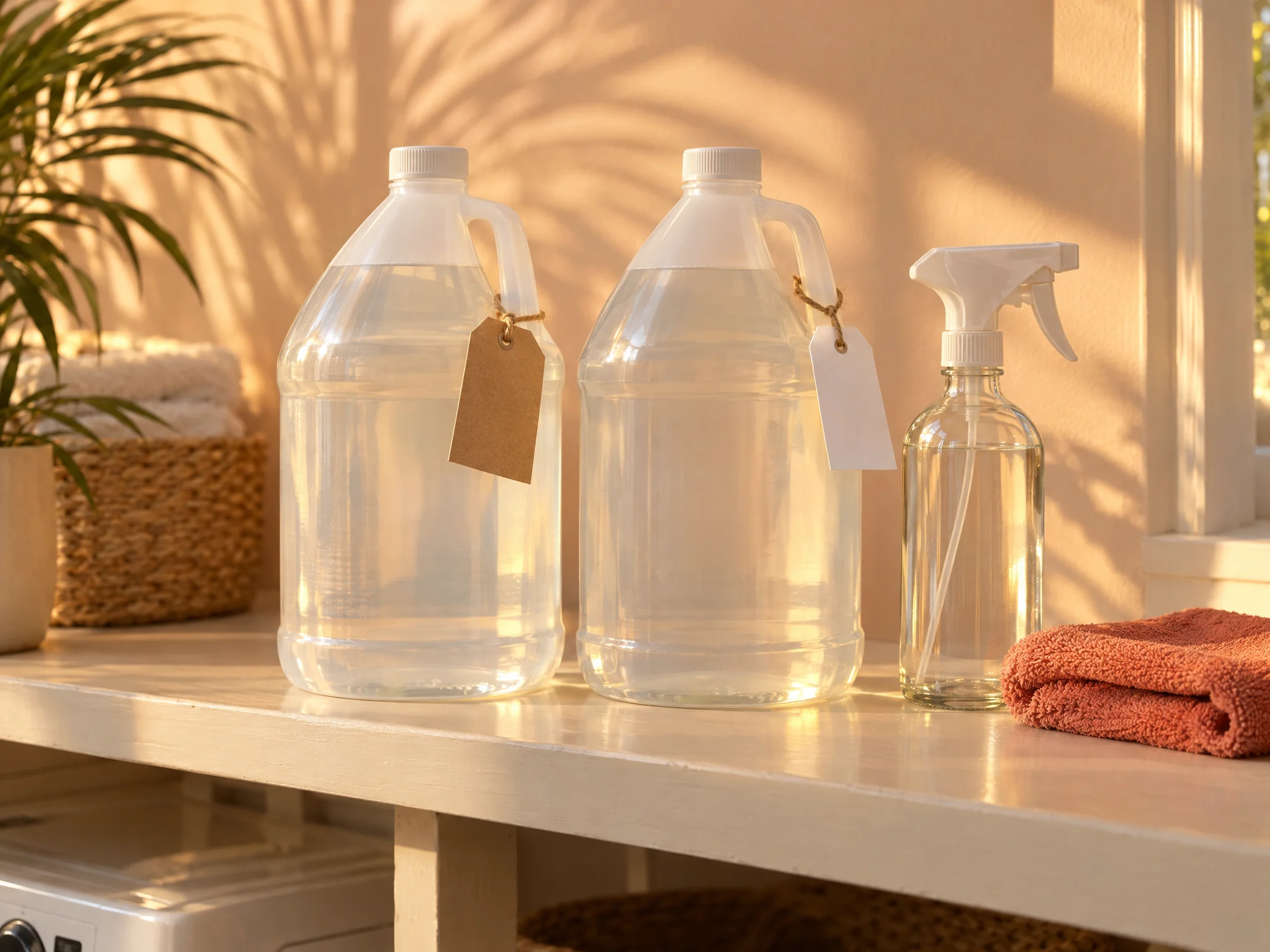
Two unlabeled jugs of clear vinegar and an empty glass spray bottle on a painted laundry shelf in warm afternoon light

Which bottle should you buy?

For most homes, plain distilled white vinegar is enough. The extra point of acid in cleaning vinegar is a convenience, not a different cleaner.

Buy distilled white vinegar if one bottle has to serve the kitchen and the cleaning caddy, or you mostly descale faucets the way the fixture maker suggests.

Buy 6% cleaning vinegar if you keep a dedicated cleaning shelf away from food and want a little more acid per cup for scale and soap scum.

Leave 20–30% concentrates on the store shelf for routine indoor cleaning unless a label covers your exact task and you can wear the protection it names.

Same rules for both bottles

Strength changes how much acid you apply, not where acid is safe. These apply whether you pick 5% or 6%.

Use with care

  • Chrome faucet scale

    Kohler suggests 50/50 white vinegar and warm water on a soft cloth.

  • Soap scum on glass and porcelain

    Rinse well and follow any finish instructions from the maker.

  • Laundry hard-water effects

    The American Cleaning Institute notes vinegar can leave its own odor.

  • Kettle and coffee maker scale

    Only when the appliance manual allows a vinegar descale.

Keep both off

  • Marble, granite, travertine, and stone tile

    Acid can etch stone. Use a neutral stone cleaner.

  • Hardwood floors and furniture

    Acid can damage the finish.

  • Grout, cast iron, and rubber gaskets

    Listed as surfaces to avoid in consumer cleaning guidance.

  • Electronics and clothing irons

    Use the manufacturer's cleaning method instead.

  • Anything mixed with bleach

    Never combine them. The vapors can be dangerous.

  • Disinfecting or mold removal

    Vinegar is neither. Use a registered product made for the job.

Why LA faucets keep asking for vinegar

LADWP says hardness varies across Los Angeles because the city blends several water sources. All three of its averages count as hard or very hard on the USGS scale, so mineral scale on faucets and shower glass comes back.

Harder water changes how often you descale, not which bottle you need. Our hard water stain guide covers the method surface by surface.

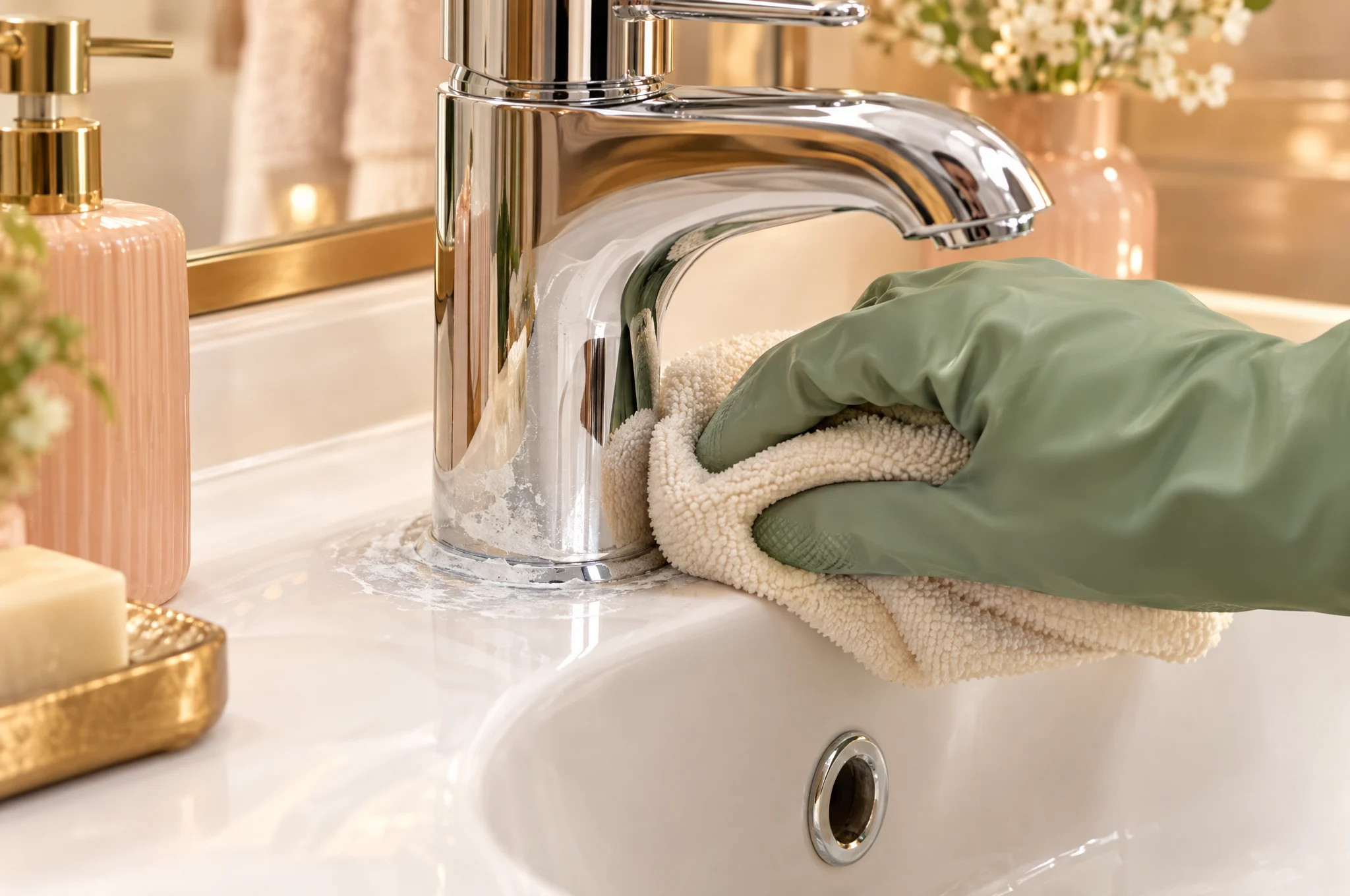
Gloved hand wiping white mineral scale from the base of a chrome bathroom faucet with a soft cloth

San Fernando Valley and Western Los Angeles

8.6 gpg (147 mg/L)

Average. Range 5.4–16.1 gpg.

USGS class: hard

Silver Lake, Downtown, and South Los Angeles

9.8 gpg (168 mg/L)

Average. Range 5.4–17.0 gpg.

USGS class: hard

Eastern Los Angeles and the Harbor

16.3 gpg (279 mg/L)

Average. Range 16.1–16.4 gpg.

USGS class: very hard

Source: LADWP water quality FAQs. gpg means grains per gallon. Santa Monica, Beverly Hills, Pasadena, and Burbank run their own water utilities, so check your own utility's report if you live there.

Vinegar questions, answered

Is cleaning vinegar stronger than white vinegar?

Usually, yes. Common cleaning vinegar is 6% acetic acid, while distilled white vinegar is commonly 5%. That is about one-fifth more acid per cup. It is the same acid, so the difference is strength, not a different cleaning chemistry. Check the percentage on the bottle, because brands vary.

Can I cook with cleaning vinegar?

Not unless the label says it is safe for food. Better Homes & Gardens notes that cleaning vinegar generally is not intended for consumption and may not meet food standards. A few brands, including Heinz, describe theirs as safe for cooking, so the bottle you own decides. Either way, store it on a cleaning shelf away from the pantry and label any spray bottle you fill.

Does cleaning vinegar disinfect?

No. The American Cleaning Institute says vinegar is not a disinfectant and will not be as effective as an EPA-registered disinfecting product. It is also not a substitute for a product made to remove mold. When a surface needs disinfecting, use a registered product and follow its label contact time.

Can I use either vinegar on granite or marble?

No. The acid in vinegar can etch or damage natural stone, including granite, marble, and stone tile. The Natural Stone Institute recommends neutral cleaners made for stone. The same caution applies to hardwood floors and furniture.

Can white vinegar replace cleaning vinegar in a DIY mix?

For routine jobs, yes. White vinegar is slightly weaker, so the same recipe will carry a little less acid. Do not make up the difference by skipping dilution on a finish whose maker gives specific instructions. Follow the surface manufacturer first.

Is 30% vinegar safe for indoor house cleaning?

Treat it as a hazardous concentrate, not a stronger version of kitchen cleaning vinegar. Safety data sheets for 30% products classify them as causing severe skin burns and eye damage. Use one only for a task its label covers, with the protective equipment it names, and never mix it with bleach.

Same acid, different strength

If you would rather hand off the scale and soap scum, La La Land Cleaning is an insured referral agency that matches Los Angeles homes with independent cleaners. Note stone counters or product preferences when you book, and we confirm scope before the visit.

Quotes depend on home size and scope. Inside-appliance and interior window cleaning are add-ons you request separately. See our bathroom cleaning and kitchen cleaning services.

Sources for this comparison

Reviewed October 13, 2026. Product strengths and directions vary by brand, so follow the label on your bottle and your surface maker's care instructions.

Photography illustrates home-care situations. It is not a record of a client visit.