Skip to content
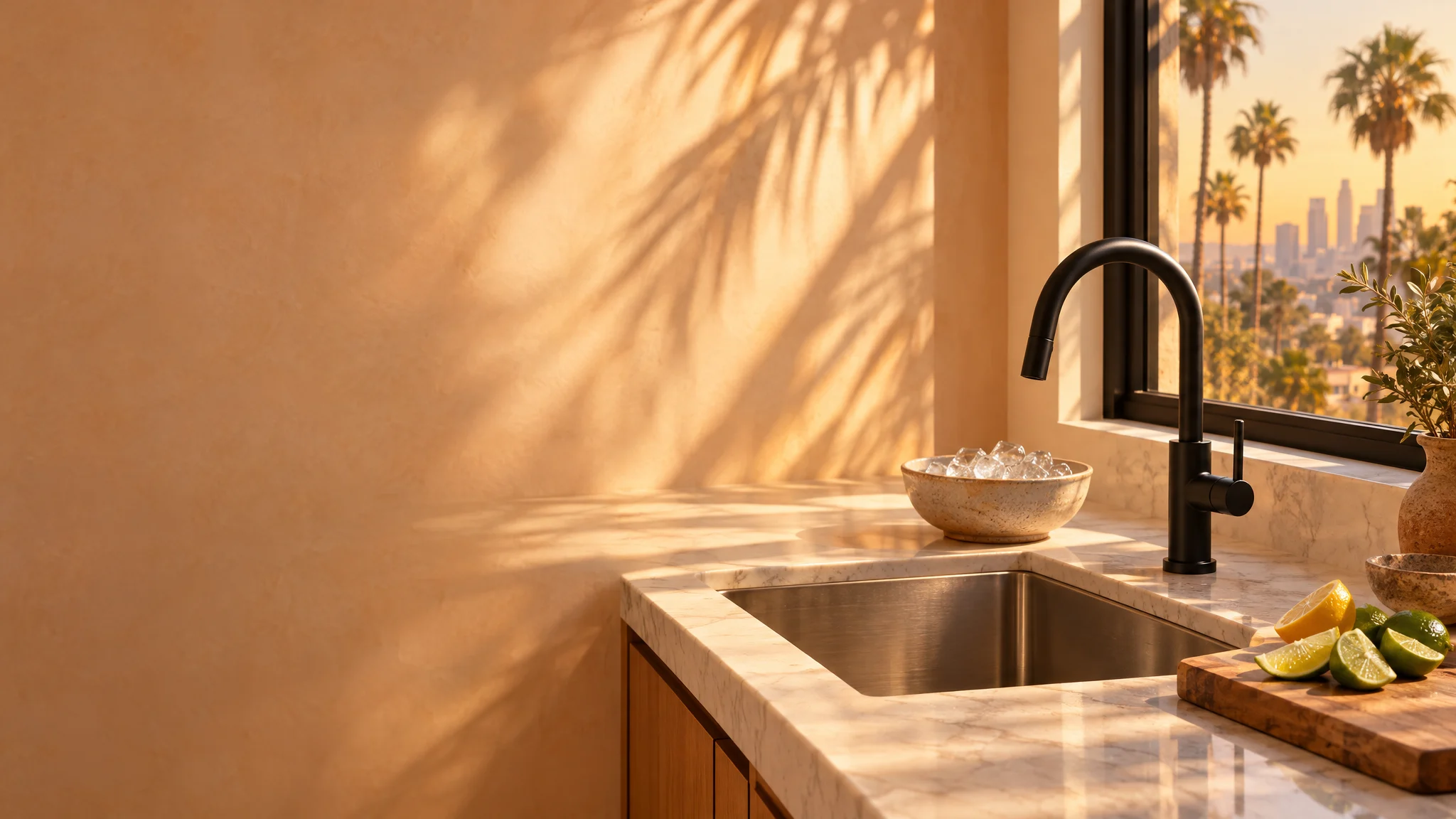
A sunlit Los Angeles kitchen sink with a matte black faucet, a bowl of ice cubes, and fresh lemon and lime wedges on a marble counter, with palm trees outside the window

For Los Angeles kitchensReviewed October 18, 2026

How to clean a garbage disposal

Most advice about disposals is folklore. This guide follows the manufacturer's method, checks the common myths, and adds what Los Angeles kitchens can send to the green bin instead.

The short answer

Turn the disposal off and scrub the underside of the rubber splash guard. Then fill the sink halfway with warm water, mix in 1/4 cup of baking soda, and run the disposal as you pull the stopper. Finish by grinding ice with lemon or lime wedges under cold water. Skip bleach and drain cleaners.

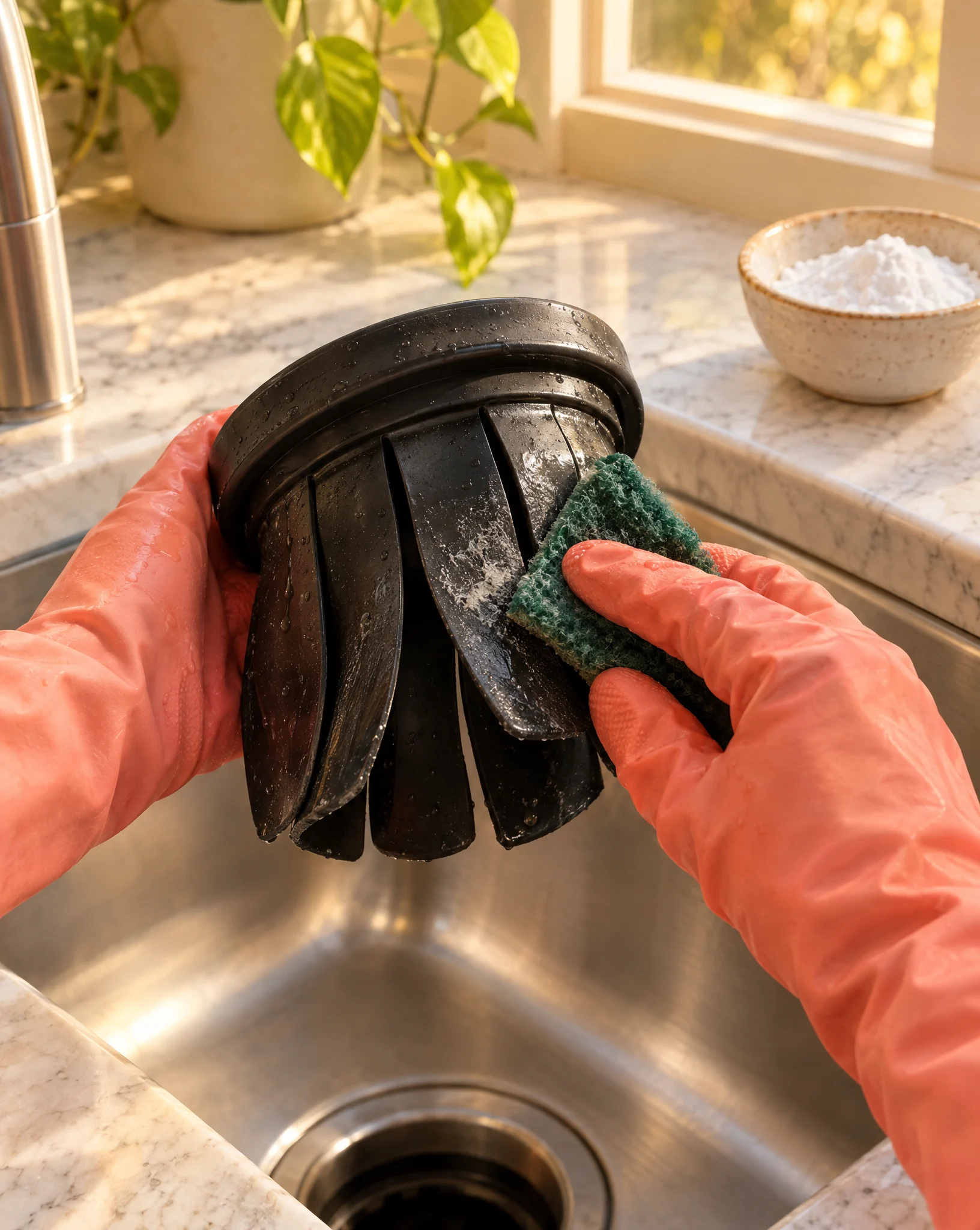
Hands in coral rubber gloves scrub the underside of a black rubber disposal splash guard with a green scouring pad over a stainless steel sink, with a bowl of baking soda on the counter

The manufacturer's method

InSinkErator, which makes most US disposals, publishes these four moves.

  • Scouring pad
  • 1/4 cup baking soda
  • Ice cubes
  • Lemon or lime wedges
  1. Cut the power

    Switch the disposal off and disconnect its power. Never put your hand down into the grinding chamber, even with the power off.

  2. Scrub the splash guard

    Food collects under the rubber baffle. Scrub its underside and the upper lip of the chamber with a scouring pad. If your baffle lifts out, you can wash it by hand or in the dishwasher.

  3. Flush with baking soda

    Put the stopper in, fill the sink halfway with warm water, and mix in 1/4 cup of baking soda. Turn the disposal on and pull the stopper at the same time so the water carries loose particles away.

  4. Freshen with ice and citrus

    Run a medium stream of cold water, turn the disposal on, and feed it ice cubes mixed with lemon or lime wedges. Let the cold water run a few seconds after the grinding sound changes.

Myth or fact? Eight disposal claims, checked

Each verdict below comes from the manufacturer or a named expert source.

Myth

Ice cubes sharpen the blades.

There are no blades to sharpen. Lugs on a spinning plate throw food against a fixed grind ring. Ice and citrus still earn their place, because InSinkErator recommends grinding them now and then to knock loose debris and keep odors down.

Source: InSinkErator FAQ

Myth

Run hot water so grease washes through.

Use cold water while you grind and for a few seconds after. Cold water firms up small amounts of grease so the disposal can break it up. Hot water is fine between grinding sessions, but grease and oil should never go down the drain at all.

Source: InSinkErator, Consumer Reports

Myth

Bleach or drain cleaner gives it a deep clean.

InSinkErator lists caustic drain cleaners and household chemicals among the things not to put into a disposal, and its guidance warns against harsh cleaning products. Its own odor fix uses baking soda and a scouring pad.

Source: InSinkErator support

Fact

Baking soda is safe to use.

It is the manufacturer's own recommendation: 1/4 cup mixed into a half-full sink of warm water, flushed through with the disposal running.

Source: InSinkErator odor guide

Myth

A bad smell means it's broken.

Odor is usually food buildup in the chamber or under the baffle, caused by too little water during and after use. Clean the baffle, run the baking soda flush, and use more cold water next time.

Source: InSinkErator odor guide

Depends

Coffee grounds and eggshells are fine to grind.

Many disposals grind them, but plumbing and wastewater experts say large amounts can build up and stop a drain, especially in older pipes. In the City of Los Angeles, both belong in the green bin.

Source: Consumer Reports, LA Sanitation

Depends

Banana peels and celery go down easily.

It depends on the model. InSinkErator says its Standard Series grinds any food except stringy, fibrous material such as banana peels, celery, and rhubarb, while its Quiet Series handles most food waste. Check your model before you feed it peels.

Source: InSinkErator FAQ

Myth

Reach in to pull out what's stuck.

InSinkErator says not to put your hand in the disposal at any time. Turn the power off and follow your model's jam instructions, or call a plumber.

Source: InSinkErator support

In Los Angeles, the green bin takes what your disposal shouldn't

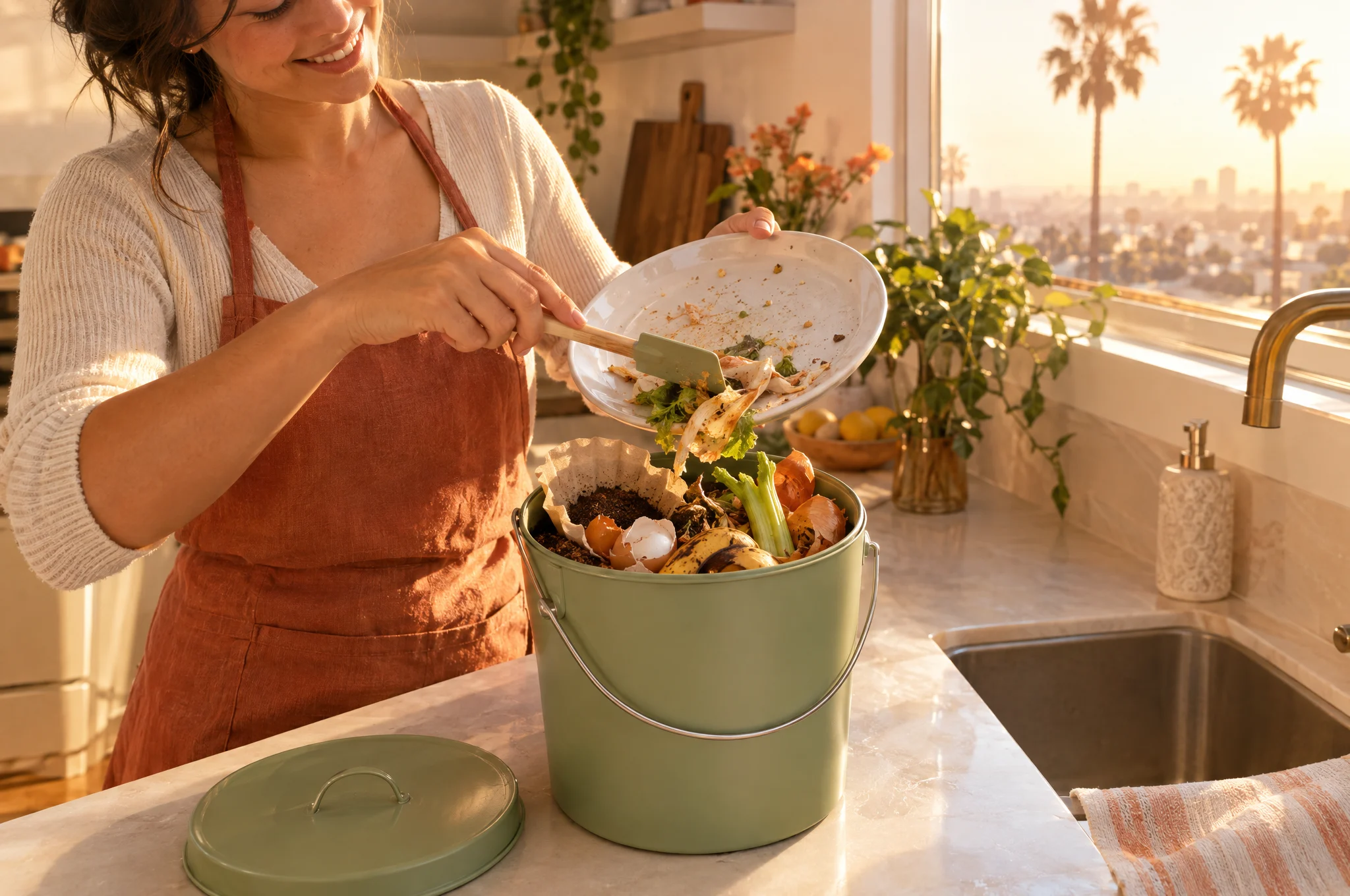
Homes serviced by LA Sanitation are required to put food scraps and food-soiled paper in the green bin. That gives coffee grounds, eggshells, and peels a better place to go than your drain.

A smiling cleaner in a terracotta apron scrapes a plate of scraps into a light green countertop pail filled with coffee grounds, eggshells, and peels, in a sunlit Los Angeles kitchen

Green bin

  • Coffee grounds and paper filters
  • Eggshells and dairy
  • Fruit and vegetable scraps, peels included
  • Bread, rice, pasta, and beans
  • Meat, bones, fish, and shells
  • Greasy napkins and food-soiled paper

Not in the green bin

  • Cooking fats, oil, and grease
  • Produce stickers and rubber bands
  • Plastic, including bags labeled compostable

LA County Public Works says used cooking oil can go to a City of Los Angeles S.A.F.E. Center or a county household hazardous waste event.

LA Sanitation offers City of Los Angeles households a free kitchen pail for collecting scraps. In apartment buildings on recycLA service, ask your property manager about organics pickup. Cities outside the City of Los Angeles run their own programs.

Cleaning problem or plumbing problem?

Only one of these is fixed with a scrub. The rest need your manual or a plumber.

It smells

Food buildup in the chamber or under the splash guard.

Clean the baffle and run the baking soda flush. This one is a cleaning job.

Water sits in the sink

If you see a whirlpool when it runs, the clog is likely in the drain line past the disposal.

InSinkErator suggests a plunger, with the other drain blocked on a double sink. If that fails, call a plumber.

It won't start

A tripped breaker or the motor's overload protection.

Check the breaker. On models with a red reset button, let the motor cool 3 to 5 minutes, then press it lightly.

It hums but won't turn

Something is jammed in the grind chamber.

Cut the power and follow your model's jam instructions. Never clear it by hand.

It leaks underneath

A loose or worn plumbing connection.

Turn it off and call a plumber. Leaks are repair work, not cleaning.

Garbage disposal questions

How often should you clean a garbage disposal?
InSinkErator does not set a fixed schedule. It calls disposals low-maintenance and says regular use with cold water helps clear scraps. Clean the splash guard periodically, grind ice and citrus now and then, and do the baking soda flush whenever you notice an odor.
Why does my garbage disposal smell?
Usually because food has built up in the grind chamber or under the rubber baffle. InSinkErator traces this to too little water flow during and after use. Scrub the baffle, run the baking soda flush, and keep cold water running for a few seconds after each use.
Can I clean a garbage disposal with vinegar?
InSinkErator's published method uses a scouring pad, baking soda, ice, and citrus, not vinegar. If you want to use any other product, check your model's manual first. Harsh chemicals and caustic drain cleaners are on the manufacturer's do-not-use list.
Can the splash guard go in the dishwasher?
If it is removable, yes. InSinkErator says washing a removable baffle by hand or in the dishwasher helps prevent odors. Many baffles are fixed in place, so scrub those from above with the power off.
What should never go down a garbage disposal?
InSinkErator's list includes fats, oils, and grease, hot grease or hot liquids, clam and oyster shells, glass, china, plastic, metal, caustic drain cleaners, paint, solvents, and household chemicals. Keep the stopper in when the disposal is not running so nothing falls in.
Where should cooking grease go in Los Angeles?
Not down the drain, and not in the green bin, which LA Sanitation says does not accept cooking fats, oil, and grease. LA County Public Works says residents can take used cooking oil to the City of Los Angeles S.A.F.E. Centers or the county's household hazardous waste events. Small amounts can be cooled, sealed in a container, and thrown out.
Will a house cleaner clean my garbage disposal?
A residential kitchen clean covers the sink and faucet. If you want the splash guard scrubbed too, ask for it when you request a quote with La La Land Cleaning, and it will be confirmed in the scope. Jams, leaks, and a disposal that will not start are plumbing problems, not cleaning tasks.
Curious about other pantry cleaners? Read whether you can mix baking soda and vinegar, or see how to clean a dishwasher, which often drains through the disposal.

Want the whole kitchen done?

La La Land Cleaning matches Los Angeles homes with insured, independent cleaners. A kitchen clean covers the sink, faucet, counters, and appliance fronts, quoted on your home and scope. Inside appliances are a separate add-on.

Sources for this guide

Reviewed October 18, 2026. Disposal models differ, so your own manual wins over any general guide. City of Los Angeles bin rules apply to homes serviced by LA Sanitation; other cities set their own.

Photography illustrates home-care situations. It is not a record of a client visit.