
Skip to content

Los Angeles bedroom guideReviewed October 16, 20268 health and cleaning sources

How often should you wash your sheets?

Once a week.

Wash your sheets and pillowcases once a week. That is the cadence allergists recommend for keeping dust mites down, and Cleveland Clinic gives the same advice. Two weeks is the outer limit the American Cleaning Institute sets, and it fits best when you do not sleep in that bed every night. Wash sooner when a pet shares the bed, when you sweat through hot Los Angeles nights, during an allergy flare, or after you have been sick.

How often to wash each piece of bedding

Sheets set the pace. Everything layered above or below them can wait a little longer.

A woman smoothing a fresh white pillowcase on a freshly made bed with a terracotta throw, in a sunlit Los Angeles bedroom with palm fronds outside the window

Sheets

Every week

Fitted and flat sheets collect sweat, body oil, and dead skin every night. Weekly washing lowers dust mite numbers and allergen levels, according to the AAAAI practice parameter. Stretch to two weeks only for a bed you do not sleep in nightly.
Pillowcases

Every week

Wash them with the sheets. Your face rests on them all night, so they follow the same weekly schedule.

Duvet covers

Every 2 weeks to a month

A cover sits between you and the insert, so it can go a little longer than the sheets. Wash it weekly if you sleep under it without a top sheet.

Comforters and blankets

Every 2 to 3 months

Monthly if you have dust mite allergies. Check the label first, since many down and wool pieces need a large-capacity or professional wash.

Mattress pads and protectors

At least monthly

The ACI's allergy guide puts mattress pads on the same monthly schedule as blankets. Wash right away after a spill or an accident.

Pillows

Every 3 to 6 months

The ACI says at least four times a year unless you use dust mite covers. Only wash pillows the label says are washable, two at a time on a gentle cycle.

Bath towels run on a different clock. The American Cleaning Institute says to hang them to dry between uses and wash them after three to five normal uses.

When to wash sooner, and when two weeks is fine

Wash sooner

  • A pet sleeps on the bed

    Every 3 to 4 days. Fur, dander, and outdoor dirt add up fast. (Sleep Foundation)

  • You sweat a lot at night

    More often than weekly, especially on hot nights. Leave the bed unmade for a while in the morning so the sheets dry out. (ACI, Cleveland Clinic)

  • You have dust mite allergies or asthma

    Weekly at minimum, plus mite-proof covers on pillows and the mattress. (AAAAI, ACAAI)

  • You have been sick

    Wash the whole set once you are over it, then go back to your usual schedule. (Cleveland Clinic)

Two weeks is fine

  • A guest room or second home

    Every two weeks, or after each guest leaves, is reasonable for a bed nobody sleeps in nightly. (Sleep Foundation)

  • A busy week

    Two weeks is the outer limit. Past that, put the sheets in the wash before anything else. (ACI)

Fresh sheets on cleaning day

Cleaners can make beds or change linens on request during a standard visit. Leave a clean set on the bed, or say where it lives in your booking notes, and the swap gets done with the rest of the bedroom.

Hot water or warm? Two allergy groups disagree

Wash bedding frequently in hot water, at least 130°F, to limit contact with dust mites.
American College of Allergy, Asthma and Immunology
Wash bedding weekly. High temperature is not necessary, and home hot water should stay below 120°F, the point where it can scald.
AAAAI dust mite practice parameter

The schedule matters more than the dial. Use the hottest water your care label allows, as the Sleep Foundation advises. Cotton usually takes hot, while polyester and many blends belong on warm. Then keep the weekly wash, which is what lowers dust mite levels.

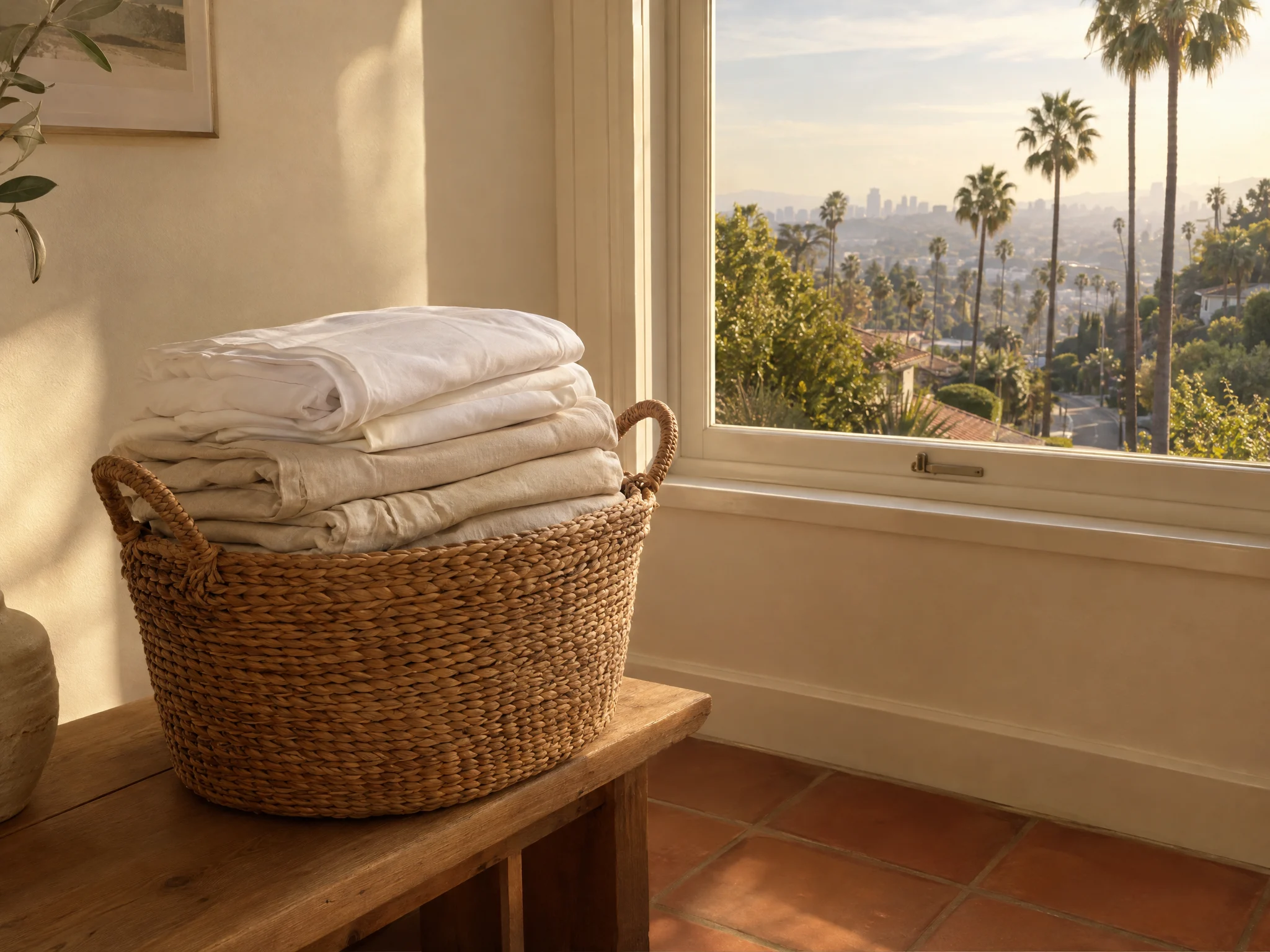
A stack of freshly washed white sheets in a woven basket on a wooden bench beside a closed window overlooking palm-lined Los Angeles hills

Los Angeles exceptions to the schedule

A weekly wash covers most LA bedrooms. These three situations change how you wash and dry.

After wildfire smoke or ash

LA County Public Health says to wash or dispose of porous items like linens after fire ash reaches your home. Shake soot off outdoors into a trash bag while wearing protection, and rewash anything that still smells of smoke.

Line-drying in pollen season

LA sun makes the clothesline tempting, but the ACAAI warns that pollen can cling to sheets and towels dried outside. If you have allergies, use the dryer on high-pollen days.

Bedroom humidity

Dust mites thrive in warm, humid rooms. The AAAAI suggests keeping humidity between 30 and 50%. A cheap hygrometer tells you which side of that range your bedroom sits on.

Sheet-washing questions

Care labels come first. These answers fill in where the label goes quiet.

Not if you keep it at two weeks. The American Cleaning Institute says sheets should be washed at least every two weeks, and Cleveland Clinic notes that even every other week has benefits. Weekly is still the better default, and the Sleep Foundation reserves the two-week gap for beds you do not sleep in every night.

Keep the rest of the bedroom on schedule

Clean sheets go further on a dusted, vacuumed room. Book a Los Angeles cleaning and we will match you with an insured cleaner, with a quote based on your home.

Sources for this guide

Reviewed October 16, 2026. Health groups give ranges rather than one rule, and your bedding's care label takes priority over any general schedule here.

Photography illustrates home-care situations. It is not a record of a client visit.